
WAREHOUSING
Multi-Client Warehousing: The Efficient Way To Scale Your Business
3 Feb 2026, 8 MINUTE READ
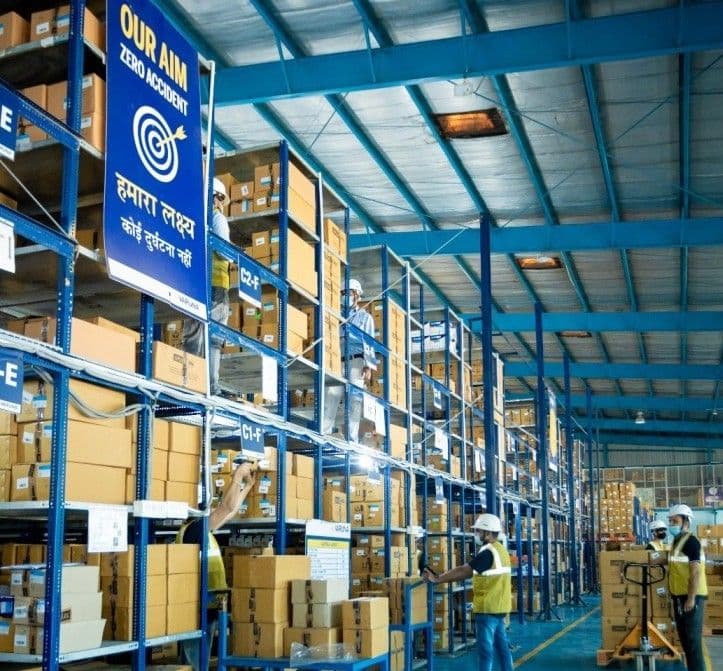

Every growing business in India eventually reaches a point where decisions related to storage and distribution begin to affect daily performance more significantly than sales or marketing plans. Orders may be steady, demand may be rising, but if goods are not stored properly or dispatched on time through road networks, the entire system begins to feel strained. This, often, is the stage when businesses realise that warehousing is no longer a back-end function but a central part of operational stability and growth.
Multi-client warehousing has emerged as an effective response to that challenge. It is neither a conceptual abstraction nor even a fad. It works as a model that provides the wherewithal for businesses to scale up without straining their finances or management bandwidth. For many Indian companies, particularly those operating across regions, this shared approach to warehousing provides a balance between control, flexibility, and cost discipline.
Understanding Multi-Client Warehousing in Practical Terms
Multi-client warehousing means storing and managing goods from several businesses in one facility while using shared infrastructure and services. Every client operates within clearly defined boundaries with separate inventory records, designated storage zones, and documented processes.
Unlike a dedicated warehouse, which would serve just one business, multi-client facilities are designed to handle varied volumes, product categories, and operational requirements simultaneously. In this regard, structured warehouse management practices coupled with teams accustomed to handling complexity without confusion can help.
The big difference for businesses, of course, is responsibility: Instead of owning the building, managing staff, and setting up systems from scratch, companies depend on a professionally managed environment that already has these elements in place.

Why the Model Fits Indian Business Conditions?
Indian businesses operate in an environment where demand and supply conditions can change sharply within short periods. Seasonal sales cycles, festival-led demand spikes, and region-specific consumption patterns often make fixed warehousing capacity inefficient.
For example, industries such as FMCG, automotive components, consumer durables, and retail experience significant volume surges during festive seasons, agricultural cycles, or promotional periods, followed by phases of softer demand. Committing to a dedicated warehouse under such conditions can result in either space shortages during peak months or underutilised infrastructure for the rest of the year.
Multi-client warehousing addresses this imbalance by allowing businesses to scale storage and handling capacity up or down based on real demand, rather than forecasts alone. It also helps manage operational constraints such as shortages of trained warehouse manpower, which vary widely across regions and are difficult for individual businesses to address consistently.
This model is especially relevant for companies distributing goods by road across multiple cities and states. Fluctuating freight availability, regional operating cost differences, and varying service expectations make centralised control challenging in standalone facilities. By outsourcing warehousing to specialised operators, businesses gain process consistency, predictable service levels, and flexibility without locking themselves into long-term infrastructure or capital-heavy commitments.
Warehouse Management as the Foundation of Shared Facilities
A shared warehouse will only work if the management of the warehouse is disciplined and clear. Without structure, there will be a higher chance of errors when more clients operate within the same space.
Warehouse management in a professionally managed multi-client facility focuses on:
- Clear allocation of storage locations.
- Defined workflows for inward and outward movement.
- Regular stock checks and reconciliation.
- Documented procedures for exception handling.
These practices ensure that every client’s inventory is independently managed, with shared infrastructures. Goods are not mixed, there is no confusion of records, and accountability remains intact.
For those businesses that in the past have had informal or loosely managed storage setups, this level of organisation often brings immediate improvement.
The Importance of a Warehousing Management System
Sitting at the center of any modern multi-client warehousing is a strong warehousing management system. This system is the digital backbone, supporting physical operations on the ground.
A WM system helps maintain precision and visibility in an environment containing several coexisting inventories. It records every movement, which allocates stock to a particular location and creates a clear audit trail for every client.
Key benefits of having such a system include:
- Real-time visibility into stock levels.
- Reduction of manual tracking and paperwork.
- Faster identification of discrepancies.
- Better planning informed by historical data.
This, for businesses, means fewer surprises and more confidence in day-to-day operations. Decisions on replenishment, space usage, and dispatch planning become data-driven versus assumption-based.
Cost Control without Operational Compromise
Perhaps one of the biggest reasons businesses choose multi-client warehousing is the ability to control costs without sacrificing professional standards. Operating a dedicated warehouse often means fixed costs-which do not vary with volume-such as rent, staffing, utilities, and maintenance.
These costs are divided among several clients in a shared facility. It is this sharing that provides each business access to fully equipped warehouses and trained teams without the full weight of such a financial burden.
Costs also become more variable: companies pay for space and services utilised in direct proportion, which better reflects real business conditions. This approach supports growth without forcing businesses into inflexible cost structures that may not suit future requirements.
Scalability to Match Business Growth
Growth is seldom a straight line. Seasonal demand, new contracts, and regional growth can all cause sudden changes in storage requirements. Multi-client warehousing is designed to absorb these fluctuations more smoothly than standalone facilities.
If volumes increase, additional space and handling capacity can often be arranged within the same warehouse or network. When demand does stabilise, the businesses are not left managing excess capacity.
The flexibility engendered lets leadership teams plan growth more confidently, knowing that warehousing will not become a bottleneck or an unnecessary expense.
Why Experienced Warehousing Companies Make a Difference
The successful operation of multi-client warehousing is highly dependent upon the capability of the operator: not all facilities are operated with the same level of discipline or transparency.
Large warehousing firms have experience in many areas besides simple physical storage: how to manage several clients without overlap, how to ensure consistency across locations, and how to adapt processes to different business needs.
Their strengths usually encompass:
- Process-driven warehouse management
- Trained personnel familiar with various product types
- Reliable warehouse management system integration
- Standard operating procedures that reduce the dependency on individuals
For enterprises, this partnership with such firms reduces operational risks while enhancing reliability over time.
Operational Discipline and Reduced Dependency
One advantage of multi-client warehousing that is often not considered is that a company does not become dependent on a few individuals. Smaller or privately managed warehouses can have knowledge concentrated with a few people, creating a risk when they leave or are unavailable.
A shared facility managed by professionals operates on systems and procedures, rather than personal memory or informal practices. This leads to continuity and stability, whether volumes grow or teams change.
This represents a great advantage, especially for those businesses that value predictability and control.
Better Use of Management Time and Resources
Managing a warehouse in-house requires considerable attention. From staffing issues to space planning and process improvements, managing a warehouse may well involve significant management time.
Companies outsource these responsibilities by leveraging multi-client warehousing. Internal teams deal less with firefighting on a day-to-day basis, but rather with planning, customer relationships, and operational improvements.
With time, this shift tends to bring on better decision-making and a clearer focus on long-term goals.
Support Consistency Across Locations
For companies operating across multiple cities, maintaining consistency in warehousing practices is a difficult task. Various facilities usually develop their own style of working, which results in variation in service levels and reporting.
Third-party multi-client warehousing provides the necessary experience for the standardisation of processes across different locations. The same principles of managing the warehouse, reporting formats, and performance benchmarks are followed.
This consistency simplifies oversight and allows businesses to more easily scale operations without losing control.
Data-Driven Improvements Through System Visibility
A good warehousing management system does more than just record stock movements; over time, valuable data is generated that can be used to enhance operations.
Businesses can analyse trends based on the duration of storage, space utilised, and the frequency of movements. These insights provide better planning and pinpoint areas where efficiency could be enhanced.
In an environment where there are multiple clients, access to this data becomes a strategic edge rather than an operational one.
Conclusion: A Thoughtful Way Forward
For Growing Businesses, scaling a business is seldom about volume increases alone. Rather, it is about systems, processes, and partnerships that all evolve in tune. Multi-client warehousing offers a structured yet flexible approach to warehouse management, fitting well with the realities of Indian businesses reliant on road-based distribution. This is where we come into play.
Our focus on disciplined warehouse management, backed by strong systems and experienced teams, reflects well on how shared warehousing can be effectively carried out. For any business that is planning to grow steadily without adding unnecessary complexity, multi-client warehousing remains one of the most practical and efficient ways forward.
Related Insights
WAREHOUSING
Role of Supply Chain Management in Economic Stability
31 Mar 2026, 8 MINUTE READ
SUPPLY CHAIN MANAGEMENT
Inventory Management Strategies for Online-Only Businesses
3 Apr 2026, 6 MINUTE READ

SUPPLY CHAIN MANAGEMENT
A Day in the Life of a Supply Chain Manager
15 Sep 2021, 3 MINUTE READ
WAREHOUSING
Multi-Client Warehousing: The Efficient Way To Scale Your Business
3 Feb 2026, 8 MINUTE READ

SUPPLY CHAIN MANAGEMENT
Top 5 Factors to Enhance Supply Chain Management
23 Feb 2024, 5 MINUTE READ
Popular Search
Supply Chain Management
Inventory Management
Logistics Supply Chain Management
Warehousing Management
3pl Third Party Logistics
Multi User Facilities
Logistics Companies In Chennai
Warehouse In Coimbatore
Logistics Services In Mumbai
Logistics Company In Delhi
Warehouses In Bangalore
Logistics Companies In Pune
Logistics Companies In Gurugram
Logistics Company In Indore
Logistics Company In Kolkata
Logistics Company In Coimbatore
Logistics Company in Hyderabad
Logistics Company in Kochi
Best Logistics Company In India
Logistics Services in Nagpur
Logistics Company in Ahmedabad
Warehousing in Delhi
Warehouse in Hyderabad
Cochin Logistics Companies
Logistics Companies In Mumbai
Warehousing In Kolkata
Warehousing In Chennai
Warehouse In Gurugram
Warehouses In Indore
Warehousing In Pune
Drive efficiencies throughout your supply chain with our technology-enabled services