
WAREHOUSING
Emerging Warehousing Trends in Tier 2 & 3 Cities: Enhancing Reach
9 Jul 2025, 6 MINUTE READ


India’s logistics sector is undergoing a major shift, with emerging cities like Rudrapur, Coimbatore, Raipur, and Indore taking center stage. As companies look to expand and tap into regional markets, these cities are becoming vital hubs for warehousing and distribution.
Driven by lower operational costs, growing industrial clusters, and rapid infrastructure development, locations such as Sanand, Haridwar, Cuttack, and Ambala are now key to decentralised warehousing trends & strategies. This marks more than just a change in geography—it signals a fundamental transformation in how logistics networks are planned, optimised, and executed across the country.
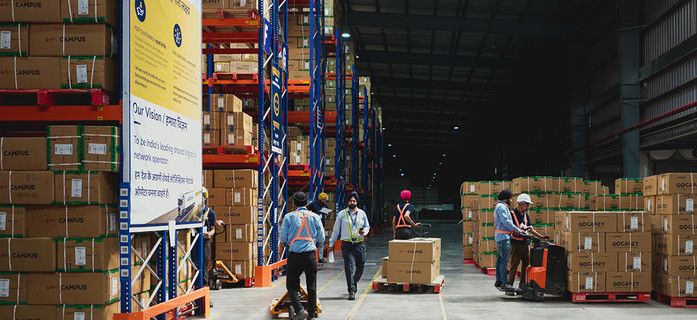
The Strategic Emergence of Tier 2 & 3 Warehousing Hubs
Those days are gone when trends in data warehousing were limited to metro cities. The need for quick, responsive distribution has made smaller urban centres like Indore, Coimbatore, Lucknow, and Bhubaneswar emerging warehousing centres. These places have affordable land, an emerging industrial base, and better connectivity with enhanced road and rail connectivity.
Consequently, they ease pressure on overloaded metro installations and enable companies to construct robust, regionally diversified supply chains. Companies can now address a greater customer base with more reliable service levels and shorter delivery times, with operating expenses kept at bay.
Key Trends Enabling Adoption in Emerging Cities
Some of the major trends enabling adoption in emerging cities are listed below:
Multi-User Warehousing Models
Multi-client, or shared warehousing trends in tier 2 and 3 cities, are becoming increasingly popular. Shared warehouses offer flexible space warehousing solutions in India—particularly valuable for seasonal, volume-based operations. Firms sharing a warehouse can save significantly on staff, utility, and maintenance expenses.
Intelligent Building Design
Next-generation Sanand, Tauru, and Cuttack warehouses are adopting leaner, more adaptable design philosophies. Green building products, modular construction, and energy-efficient processes are being used to reduce construction and operating costs without any compromise on performance.
Integration with Regional Transport Corridors
Strategically locating warehouses along national highways, industrial parks, and freight arteries—like those near Nagpur, Ambala, and Hyderabad—provides easy access to distribution channels. This infrastructure configuration minimises turnaround time and enables continuous supply chains at minimal incremental cost.
Warehouse Operations Moving Towards Cost-Effectiveness
As warehouse operations continue to evolve, small and mid-sized facilities are not being left behind. Many are now embracing modern technologies to improve efficiency, reduce errors, and scale operations effectively, even with limited resources. Here are a few reasons why:-
Improved Inventory Control
Smaller warehouses in cities such as Rudrapur, Raipur, and Sonauli are beginning to adopt data-driven inventory management systems due to limited space and budgets. Inventory levels are optimised in these systems, which minimises holding and stockout risk.
Effective Labour Deployment
Cities like Haridwar, Coimbatore, and Sanand offer access to cheap pools of labour. But it's not just lower wages—warehouses here use digital forecasting software to plan shifts, task employees, and maximise worker productivity.
Energy-Efficient Infrastructure
Sustainability has become a core operating practice. Warehouses now have solar panels, smart meters, and LED lighting installations in places like Cuttack, Lucknow, and Nagpur to reduce energy costs without increasing their carbon footprint.
Real-Time Performance Monitoring
With IoT sensors and cloud-based dashboards, managers of warehouses in cities like Tauru, Kolkata, and Indore enjoy end-to-end real-time visibility throughout operations from storage capacity to incoming goods. Such fine-grained information informs day-to-day decision-making and strategic planning.
Technology Adoption in Small Markets
Even in smaller cities, warehouses are making big strides in modernisation. By adopting advanced technologies, these facilities are streamlining operations, improving accuracy, and staying competitive in an increasingly digital supply chain landscape. Some of the modern maneuvers are listed below :-
Computerised Warehouse Management Systems (WMS)
Small-facility warehouses in Raipur, Rudrapur, and Coimbatore are increasingly adopting cloud-native WMS solutions to automate order processing, tracking inventory, and generating reports. Cloud-native solutions are scalable, and hence small facilities can process large quantities with few errors.
IoT and Sensor-Based Tracking
Sensors are changing warehouse management in places like Nagpur, Ambala, and Cuttack, covering everything from temperature control of sensitive products to monitoring space usage. This type of monitoring enables better planning, automation, and anticipation of requirements in operations.
Data-Driven Layout Planning
Simulation planning systems are helping warehouses in Sanand, Lucknow, and Hyderabad develop space-efficient, streamlined layouts that eliminate wasted space, reduce movement paths, and reduce handling time. Even small facilities are seeing dramatic throughput improvement with such advanced planning practices.
Predictive Maintenance Practices
Predictive analytics solutions used in cities like Kolkata, Haridwar, and Tauru monitor equipment usage and health behavior to recommend scheduled maintenance, avoiding unexpected downtime. It significantly minimises unplanned downtime and related costs.
The Road Ahead for Warehousing in Emerging Cities
The warehousing boom in cities such as Rudrapur, Raipur, Coimbatore, and Sanand is not a temporary trend, it's a shift in strategy. These cities are emerging as the model for future-proof logistics facilities, fueled by their cost advantage, improved accessibility, and growing industrial ecosystems. With the evolution of smart facility design, the use of collaborative smart warehousingmodels, and the integration of sophisticated technology, businesses are building supply chains that are efficient, agile, and forward-looking.
And with consumer demand in the markets ongoing to grow, these hubs are poised to facilitate the next leap of logistics growth. In a rapidly evolving world of logistics, firms that leverage the potential of emerging cities like Nagpur, Hyderabad, Lucknow, and Cuttack are not just cutting costs, they're also gaining ground. From increasing regional penetration to offering more intelligent services, India's warehousing story is being rewritten and these cities are writing it.
Frequently Asked Questions
Q1: Why are tier 2 and 3 cities becoming hotspots for warehousing development in India+
With rising real estate costs and congestion in metro cities, businesses are turning to tier 2 and 3 cities for more affordable land, improved connectivity, and access to new consumer markets. Government infrastructure initiatives like Bharatmala and Gati Shakti have further improved logistics corridors, making these cities increasingly viable for warehousing.
Q2: How are businesses leveraging warehousing in smaller cities to improve+
Warehouses in tier 2 and 3 cities act as decentralised distribution hubs, allowing companies to shorten delivery timelines and reduce transportation costs. This proximity to end consumers helps improve fulfilment efficiency, especially for e-commerce and FMCG sectors.
Q3: What role does technology play in modern warehouses in tier 2 and 3 cities?+
Emerging warehousing facilities in smaller cities are adopting tech-driven solutions like warehouse management systems (WMS), IoT for inventory tracking, and automation for sorting and picking. These advancements ensure that warehouses outside metros remain competitive and efficient.
Q4: Are there any challenges associated with warehousing in tier 2 and 3 cities?+
Yes, while there are clear advantages, challenges include limited availability of skilled labour, inadequate infrastructure in certain regions, and the need for greater investment in digital readiness. However, these are steadily being addressed through private and public sector initiatives.
Q5: Which industries are driving demand for warehousing in tier 2 and 3 cities?+
Key sectors include e-commerce, FMCG, pharma, retail, and automotive. The rapid rise in digital adoption, increasing consumer demand in non-metro areas, and supply chain diversification strategies post-pandemic are all fuelling this trend.
Related Insights
WAREHOUSING
Emerging Warehousing Trends in Tier 2 & 3 Cities: Enhancing Reach
9 Jul 2025, 6 MINUTE READ
WAREHOUSING
How Fulfilment Centers Improve Inventory and Warehouse Management for Online Brands
31 Mar 2026, 5 MINUTE READ
WAREHOUSING
Ethical Logistics: Building Trust through Integrity and Transparency
15 Jul 2024, 6 MINUTE READ

WAREHOUSING
Top 6 Warehouse Design Trends in India
11 Feb 2022, 5 MINUTE READ

WAREHOUSING
What Services Do Leading 3PL Companies Offer Beyond Transportation and Warehousing?
11 Jun 2026, 6 MINUTE READ
Popular Search
Supply Chain Management
Inventory Management
Logistics Supply Chain Management
Warehousing Management
3pl Third Party Logistics
Multi User Facilities
Logistics Companies In Chennai
Warehouse In Coimbatore
Logistics Services In Mumbai
Logistics Company In Delhi
Warehouses In Bangalore
Logistics Companies In Pune
Logistics Companies In Gurugram
Logistics Company In Indore
Logistics Company In Kolkata
Logistics Company In Coimbatore
Logistics Company in Hyderabad
Logistics Company in Kochi
Best Logistics Company In India
Logistics Services in Nagpur
Logistics Company in Ahmedabad
Warehousing in Delhi
Warehouse in Hyderabad
Cochin Logistics Companies
Logistics Companies In Mumbai
Warehousing In Kolkata
Warehousing In Chennai
Warehouse In Gurugram
Warehouses In Indore
Warehousing In Pune
Drive efficiencies throughout your supply chain with our technology-enabled services