
LOGISTICS
What Is Logistics Management and How It Supports Supply Chain Operations
17 Aug 2026, 6 MINUTE READ
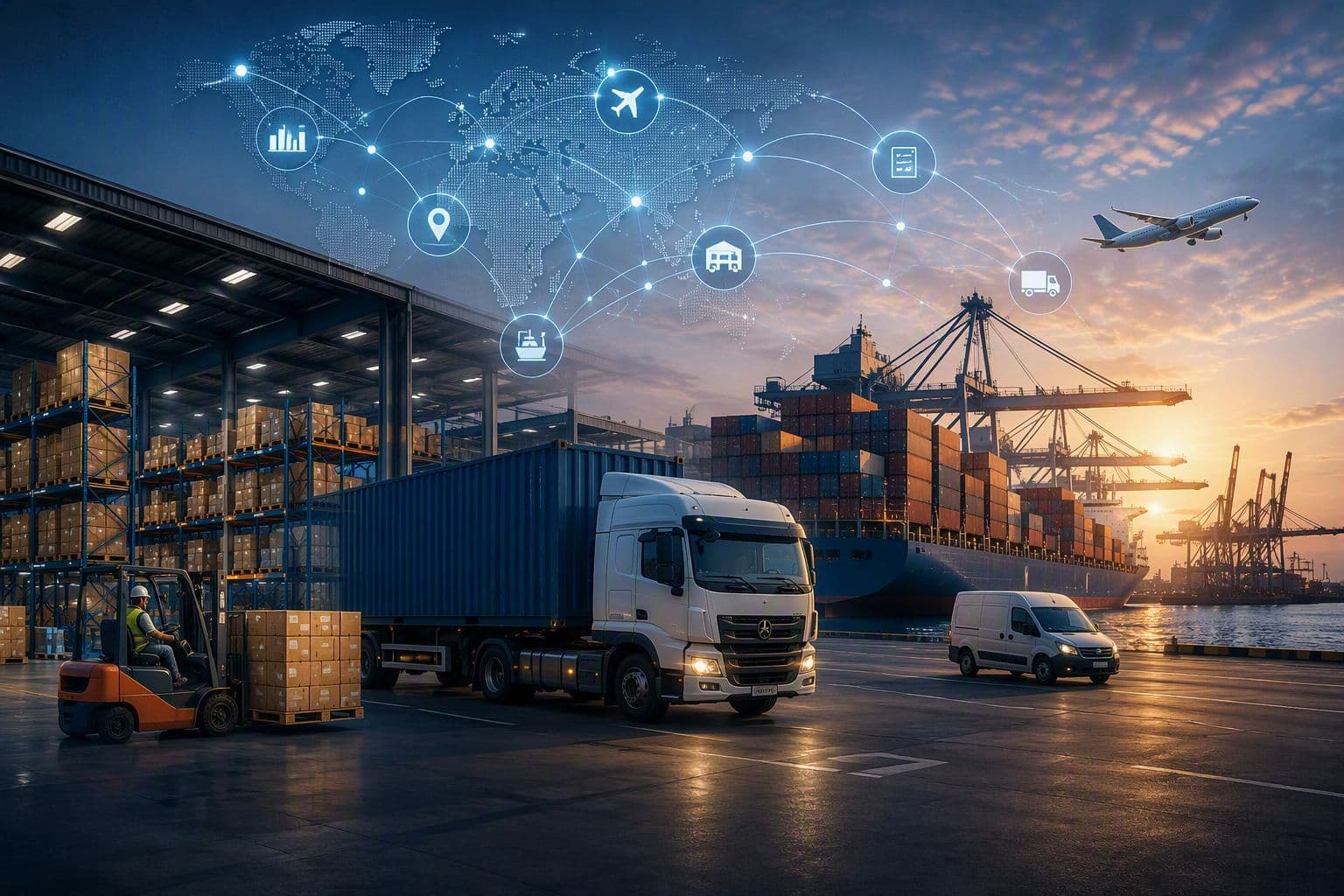

Quick Summary: Logistics management covers how goods are planned, stored, and moved from one point to another, including warehousing, inventory, route planning, and tracking. It's a core part of the wider supply chain, and when it works well, businesses save costs, deliver on time, and build customer trust.
Think about the last time a parcel or a delivery reached you exactly when it was supposed to. You probably didn't think twice about it. But behind that one delivery sits a whole chain of decisions: which route to take, where the goods were stored, how they were tracked, and who made sure nothing went wrong along the way.
Most people only notice logistics when something goes wrong, a delay, a damaged package, a wrong address. When it works well, it's invisible. This blog looks at what logistics management really involves, how it ties into the wider supply chain, and why businesses in India are paying closer attention to it now more than ever.
What Is Logistics Management?
At its core, logistics management is about planning and controlling how goods move and how they're stored along the way. That sounds simple enough, but in practice it means handling warehousing, inventory, delivery schedules, and route decisions, often all at once and often under pressure.
India makes this particularly tricky. The country isn't uniform. A route that works in Maharashtra might not translate well to Bihar or the hill regions of the north. Road quality changes, local rules change, even the pace of business changes from one city to the next. Logistics management has to account for all of it, which is exactly why some businesses handle it well, and others constantly struggle to keep up.
What Actually Goes Into Logistics Management
People often assume logistics is just "delivery," but that's only one piece of it. There's a fair amount that happens before goods ever leave a warehouse, and just as much that happens after.
- Warehousing and storage – goods sitting idle still need to be looked after properly, kept safe, and kept organised so they can be found quickly when needed.
- Inventory management – knowing what stock exists and where it's sitting, so businesses don't end up overstocked in one place and short in another.
- Route planning – working out which roads actually make sense, not just on paper but in real conditions.
- Order processing – the admin side of things, confirming orders and getting them ready to move without unnecessary delays.
- Tracking and communication – keeping people in the loop, because uncertainty about where goods are causes more frustration than the delay itself sometimes does.
None of these pieces works in isolation. A warehouse can be perfectly organised, but if route planning is poor, deliveries still end up late. That's really the point of logistics management: getting all these parts to work together instead of against each other.
How Logistics Management and Supply Chain Fit Together
People tend to use "logistics" and "supply chain" as if they mean the same thing, but they don't quite. The supply chain is the full journey a product takes, from raw materials all the way to the person who eventually buys or uses it. Logistics management and supply chain overlap heavily, but logistics is really the part that deals with movement and storage specifically.
Put another way, supply chain is the whole picture, and logistics management is one of the most important brushstrokes in it. If logistics falls apart, whether that's a warehouse mismanaging stock or a delivery running late, the ripple effect touches the rest of the supply chain too. Production schedules get pushed back, businesses lose time explaining delays to their own customers, and trust takes a hit.
This is really why more businesses in India are looking closely at logistics management and supply chain as connected problems rather than separate departments. Fixing one usually means paying attention to the other.
Why This Matters for Indian Businesses Right Now
India's business environment has been shifting for a while now, and logistics has had to keep pace. Businesses that once operated in one city are now trying to reach customers three states away, and that shift puts real pressure on how goods move.
- Cost control – poor logistics quietly eats into margins through wasted fuel, unnecessary storage time, and repeated delays.
- On-time delivery – this one is obvious, but it's worth saying: customers notice when goods don't arrive when promised, and they remember it.
- Trust over time – consistency builds relationships. A business that delivers reliably, month after month, earns a kind of loyalty that's hard to win back once lost.
- Better forecasting – when logistics data is tracked properly, businesses can actually predict demand instead of guessing at it.
- Room to grow – expanding into a new region is far less risky when there's already a logistics system that can handle it.
None of this is particularly glamorous, but it's the difference between a business that scales smoothly and one that keeps hitting the same problems again and again.
The Difficulties Nobody Really Talks About
Logistics management in India isn't without its headaches, and it's worth being honest about that rather than pretending everything runs perfectly once you "manage it well."
- Road conditions vary wildly – what's a two-hour drive in one state can take twice as long somewhere else, purely because of infrastructure.
- State-level rules differ – documentation and compliance aren't always consistent across state borders, which slows things down more than people expect.
- Traffic in cities – anyone who has driven in an Indian city during peak hours knows this needs no further explanation.
- Seasonal spikes – certain months bring a surge in demand, and warehousing or delivery schedules that work fine normally can suddenly feel stretched thin.
- Coordinating across regions – moving goods across multiple states means constant communication between teams who might be hundreds of kilometres apart.
None of these problems is unusual, and most businesses run into at least one of them regularly. The ones who manage well aren't the ones who avoid these issues entirely; they're the ones who've built systems that absorb the shock when things don't go to plan.
Final Thoughts
Logistics management doesn't often get much credit, mostly because it works best when nobody notices it at all. But every business that depends on moving goods across India, whether that's between two cities or across half the country, is relying on it more than they might realise. Get it right, and the rest of the supply chain tends to follow.
This is exactly the space Varuna operates in. With a solid grip on road logistics across India and an understanding of just how varied the country's routes and regions can be, Varuna helps businesses move goods with fewer surprises and a lot more consistency.
Frequently Asked Questions
Q1: How is logistics management different from supply chain management?+
Supply chain covers the entire journey of a product, from raw material to end user. Logistics management is one part of that journey, specifically focused on movement and storage of goods.
Q2: Why is logistics management important for businesses in India?+
India's size and varied infrastructure make logistics genuinely difficult to get right. Good logistics management helps control costs, keeps deliveries on time, and supports business growth into new regions.
Q3: What are the main components of logistics management?+
Warehousing, inventory management, route planning, order processing, and tracking are the core pieces. They all need to work together for goods to move smoothly.
Q4: What challenges do businesses commonly face with logistics in India?+
Varying road conditions, different state-level rules, city traffic, seasonal demand spikes, and coordinating across regions are some of the recurring difficulties businesses run into.
Q5: How can businesses improve their logistics management?+
Reviewing past delivery data, maintaining clear communication across teams, investing in proper warehousing, and working with logistics partners who understand local routes all help improve reliability over time.
Related Insights

LOGISTICS
5 Trends that are Reshaping the Supply Chain Industry
5 Nov 2024, 5 MINUTE READ

LOGISTICS
Indian Logistics During Covid-19 Pandemic - The Journey from Resilience to Rebound
19 Sep 2020, 6 MINUTE READ

LOGISTICS
Impact of Fuel Prices in India on Logistics and Supply Chain Efficiency
5 Sep 2024, 5 MINUTE READ
LOGISTICS
Inbound vs Outbound Logistics: Key Differences & Benefits in 2026
22 Apr 2026, 6 MINUTE READ
LOGISTICS
How AI Is Changing Logistics and Supply Chain Operations
26 May 2026, 5 MINUTE READ
Popular Search
Supply Chain Management
Inventory Management
Logistics Supply Chain Management
Warehousing Management
3pl Third Party Logistics
Multi User Facilities
Logistics Companies In Chennai
Warehouse In Coimbatore
Logistics Services In Mumbai
Logistics Company In Delhi
Warehouses In Bangalore
Logistics Companies In Pune
Logistics Companies In Gurugram
Logistics Company In Indore
Logistics Company In Kolkata
Logistics Company In Coimbatore
Logistics Company in Hyderabad
Logistics Company in Kochi
Best Logistics Company In India
Logistics Services in Nagpur
Logistics Company in Ahmedabad
Warehousing in Delhi
Warehouse in Hyderabad
Cochin Logistics Companies
Logistics Companies In Mumbai
Warehousing In Kolkata
Warehousing In Chennai
Warehouse In Gurugram
Warehouses In Indore
Warehousing In Pune
Drive efficiencies throughout your supply chain with our technology-enabled services
View Services