
LOGISTICS
How AI Is Changing Logistics and Supply Chain Operations
26 May 2026, 5 MINUTE READ
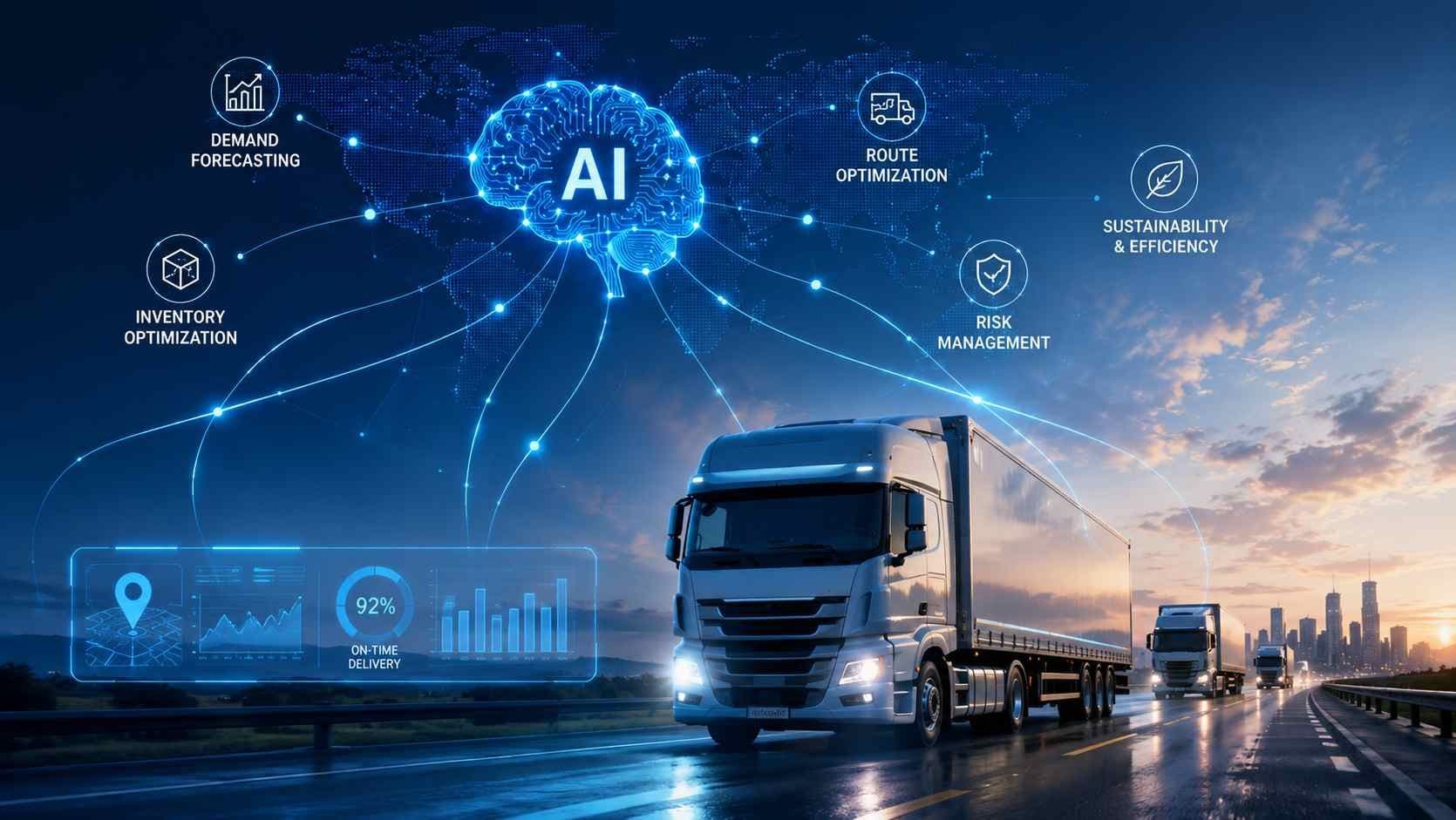

Walk into any logistics operation in India, and you will find people solving the same problems they were solving five years ago, just with more pressure on them. Tighter delivery windows, more demanding clients, rising costs, and a supply chain that rarely behaves the way it is supposed to. AI has not come in and flipped all of that overnight, but it has given businesses genuinely useful tools to handle these challenges better. The change is less dramatic than headlines suggest, but more meaningful than most people realise. Here is a practical look at what AI is actually doing for logistics supply chain management in India today.
Why AI Matters in Logistics Right Now
The honest answer is that logistics in India has always involved managing a lot of moving parts with limited information and limited time. Decisions get made under pressure, plans fall apart, and teams spend a significant chunk of their day reacting to things that could have been anticipated. AI does not remove all of that, but it does give businesses better information faster, and that changes how well they can respond.
What makes AI particularly relevant right now is that it has become practical. A few years ago, implementing AI in logistics meant expensive custom systems that only large enterprises could afford. Today, the tools are more accessible, more cloud-based, and far easier to integrate into existing operations. Businesses of different sizes across India are finding real uses for AI in their day-to-day logistics and supply chain work, and the gap between those who are using it and those who are not is starting to show. Here are the key areas where that difference is most visible.
Demand Forecasting
Most businesses in India have been managing inventory planning the same way for years. Look at last month's numbers, factor in what you know about the season, and hope the estimate holds. It works often enough, but it leaves a lot of room for error, particularly when demand shifts quickly or when operations span multiple regions with different buying patterns.
AI forecasting tools help by pulling together data from multiple sources at once, including sales history, supplier lead times, regional trends, and upcoming events, and identifying patterns that are genuinely difficult to spot manually. For anyone working in supply chain and logistics, the result is a demand estimate that is more grounded in what is actually likely to happen rather than what happened some months ago. Here is where businesses tend to notice the difference:
- Reduced overstock and stockouts:
Better forecasting means you are not over-ordering out of caution or running short at a critical time. Both situations cost money, and even a modest improvement in accuracy reduces how often they happen. - Seasonal preparedness:
Festivals, harvest seasons, and regional events create demand spikes that are predictable in theory but hard to plan for precisely. AI models built on historical data can flag these well ahead of time. - Better vendor coordination:
A more reliable forecast makes supplier conversations more structured. Orders are placed based on projected need rather than rough guesses, which smooths out the procurement process. - Dynamic replanning:
When something unexpected happens, a delayed supplier or a sudden demand surge, AI systems recalculate quickly and surface options rather than leaving your team to figure it out under pressure.
Route Optimisation
Planning routes in India is genuinely difficult. Traffic in urban centres, varying road conditions across regions, toll structures, and delivery windows all create a level of complexity that is hard to manage manually, especially when you are coordinating multiple deliveries across a city or region.
AI-based route optimisation tools process live traffic data, historical route performance, vehicle capacity, and delivery schedules simultaneously to suggest routes that actually hold up in real conditions. The results are not just faster deliveries. Fuel costs come down, vehicles are used more efficiently throughout the day, and late deliveries become less frequent. For businesses managing large fleets or complex distribution networks, these savings are meaningful and consistent. Varuna has integrated route optimisation tools into its logistics operations precisely because the gains are tangible and repeatable, not just theoretical.
Warehouse Management
A warehouse that runs inefficiently creates problems that ripple through the entire supply chain. Slow picking, misplaced inventory, and poor space utilisation all add costs that are easy to overlook individually but significant when added up over time.
AI-powered warehouse management systems bring a level of real-time intelligence to warehouse operations that manual processes simply cannot match. They track inventory continuously, flag replenishment needs before stock runs out, and recommend storage placements based on how frequently products are picked. The improvements businesses in India are seeing most consistently include:
- Slotting optimisation:
Products are placed where they make operational sense based on pick frequency and order patterns, reducing unnecessary movement within the facility. - Predictive maintenance:
AI monitors equipment health and surfaces potential failures before they cause downtime, rather than waiting for something to break mid-operation. - Labour planning:
Analysing order volumes and facility traffic patterns helps managers deploy the right number of staff at the right times, avoiding both idle periods and bottlenecks. - Inventory accuracy:
Real-time tracking closes the gap between what the system shows and what is physically on the shelves, which is a common source of operational errors in manually managed warehouses.
Real-Time Visibility and Tracking
Lack of visibility has been a persistent frustration in Indian logistics for a long time. Once goods leave a facility, getting reliable updates on their whereabouts has historically meant chasing phone calls and hoping for accurate information. That is stressful for the logistics team and even more so for clients waiting on their consignments.
AI-enabled tracking systems have changed this considerably. By combining GPS data, sensor inputs, and analytics, these systems provide real-time visibility across the supply chain from the moment goods leave the warehouse to the point of delivery. When a delay is detected, the system flags it automatically so the team can respond before it becomes a bigger problem. Clients can monitor their consignments through live dashboards without needing to call anyone for updates.
Risk Management
Disruptions in Indian logistics are frequent enough that they are practically a planning assumption rather than an exception. Monsoons, regulatory changes, traffic incidents, and sudden demand shifts all have the potential to throw a well-planned operation off course. The traditional approach has been to deal with these things after they happen, which usually means the damage is already done.
AI helps by monitoring a range of signals continuously and surfacing early warnings when conditions suggest a disruption might be coming. This gives teams enough lead time to build contingency plans rather than scrambling in the middle of a crisis. The most practically useful applications in this space include:
- Disruption detection:
AI identifies unusual patterns in delivery timelines, supplier behaviour, or order volumes that might indicate an emerging problem before it becomes critical. - Scenario modelling:
Logistics planners can simulate how different disruptions might affect their network and prepare responses in advance rather than improvising under pressure. - Supplier risk scoring:
Analysing supplier performance data over time helps businesses identify which partners present the greatest risk to their operations and address those relationships proactively. - Compliance monitoring:
With regulations varying across Indian states, AI tools that track changes and flag relevant compliance requirements help businesses stay on top of things without dedicating significant manual effort to it.
Making the Most of AI in Logistics
AI is not a switch you flip and immediately start getting results. Getting real value from these tools requires good data to work with, systems that integrate sensibly with existing operations, and people who understand how to act on what the AI surfaces. That takes time and the right partners. But for businesses that are willing to invest in getting this right, the advantages are becoming increasingly hard to ignore. Better forecasting, more efficient operations, greater visibility, and stronger resilience are not small improvements in a sector as competitive and demanding as Indian logistics.
For businesses looking for a logistics partner that is actively building these capabilities, We bring together operational scale, technology investment, and a genuine understanding of how logistics supply chain management works across India. It is the kind of partnership that makes sense for businesses that are serious about where the industry is heading.
Frequently Asked Questions
Q1: How is AI improving logistics and supply chain management in India? +
AI is helping logistics companies improve demand forecasting, route planning, warehouse efficiency, and real-time tracking. It enables businesses to make faster decisions, reduce delays, and manage supply chain operations more efficiently.
Q2: What are the biggest benefits of AI in supply chain and logistics? +
The biggest benefits include better inventory management, reduced fuel and operational costs, improved delivery accuracy, real-time shipment visibility, and stronger risk management during disruptions.
Q3: Can small and medium-sized businesses use AI in logistics? +
Yes, AI tools have become more accessible and cloud-based, making them practical even for small and medium-sized businesses. Companies no longer need expensive custom systems to benefit from AI-powered logistics solutions.
Q4: How does AI help with route optimisation in logistics? +
AI-based route optimisation analyses live traffic, delivery schedules, vehicle capacity, and historical route performance to suggest faster and more efficient delivery routes. This helps reduce fuel consumption and improve on-time deliveries.
Q5: Why is real-time visibility important in modern supply chains? +
Real-time visibility allows businesses and clients to track consignments accurately, respond quickly to delays, and improve communication across the supply chain. It also helps logistics teams identify issues early before they become major disruptions.
Related Insights

LOGISTICS
5 Trends that are Reshaping the Supply Chain Industry
5 Nov 2024, 5 MINUTE READ

LOGISTICS
Indian Logistics During Covid-19 Pandemic - The Journey from Resilience to Rebound
19 Sep 2020, 6 MINUTE READ

LOGISTICS
Impact of Fuel Prices in India on Logistics and Supply Chain Efficiency
5 Sep 2024, 5 MINUTE READ
LOGISTICS
Inbound vs Outbound Logistics: Key Differences & Benefits in 2026
22 Apr 2026, 6 MINUTE READ
LOGISTICS
How AI Is Changing Logistics and Supply Chain Operations
26 May 2026, 5 MINUTE READ
Popular Search
Supply Chain Management
Inventory Management
Logistics Supply Chain Management
Warehousing Management
3pl Third Party Logistics
Multi User Facilities
Logistics Companies In Chennai
Warehouse In Coimbatore
Logistics Services In Mumbai
Logistics Company In Delhi
Warehouses In Bangalore
Logistics Companies In Pune
Logistics Companies In Gurugram
Logistics Company In Indore
Logistics Company In Kolkata
Logistics Company In Coimbatore
Logistics Company in Hyderabad
Logistics Company in Kochi
Best Logistics Company In India
Logistics Services in Nagpur
Logistics Company in Ahmedabad
Warehousing in Delhi
Warehouse in Hyderabad
Cochin Logistics Companies
Logistics Companies In Mumbai
Warehousing In Kolkata
Warehousing In Chennai
Warehouse In Gurugram
Warehouses In Indore
Warehousing In Pune
Drive efficiencies throughout your supply chain with our technology-enabled services