
WAREHOUSING
Warehouse Layout Strategies for High-Volume FMCG Operations
31 Mar 2026, 3 MINUTE READ
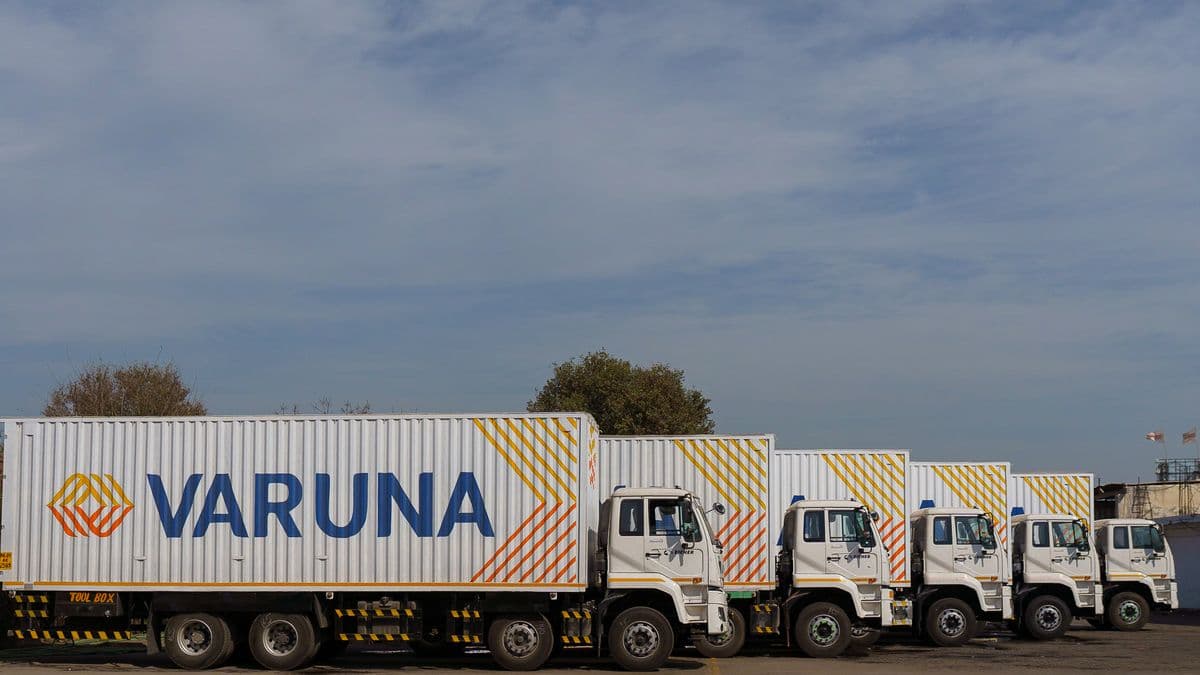

The Fast-Moving Consumer Goods (FMCG) sector operates on the edge of efficiency. With razor-thin margins and products that move at lightning speed, the physical configuration of your distribution centre is not just a backdrop for operations; it is a critical engine of profitability.
At Varuna Group, we understand that for high-volume FMCG players, the warehouse layout is the silent partner in ensuring that supply chains remain resilient and responsive to volatile market demands.
The Foundation of FMCG Warehouse Design
A successful warehouse layout for high-volume operations is predicated on the balance between space utilisation and throughput speed. Unlike sectors with slower-moving stock, FMCG demands a design that prioritises accessibility and minimises travel time. Every metre a forklift travels unnecessarily translates to a delay in the delivery cycle and an increase in operational costs.
To achieve this, the primary objective of your warehouse management strategy must be the reduction of congestion. In high-volume environments, bottlenecks usually occur at the loading docks or within narrow aisles where picking density is highest. By adopting a flow-centric design, such as the U-shaped or I-shaped flow, businesses can ensure that goods move through the facility in a logical, unidirectional manner.
Strategic Zoning and Product Placement
In the realm of FMCG, not all stock is created equal. The Pareto Principle often applies here, where 20 percent of your SKUs likely account for 80 percent of your movement. A sophisticated inventory management approach requires a layout that places these high-velocity items closest to the dispatch area.
- Fast-Moving Zone: Located near the shipping docks to ensure rapid turnover and minimal travel for pickers.
- Medium-Moving Zone: Positioned in the central areas of the warehouse.
- Slow-Moving Zone: Reserved for the furthest reaches or higher racking levels, as these items do not require frequent access.
By categorizing inventory based on turnover frequency, you effectively shorten the 'pick path', which is the total distance a worker or automated vehicle travels to complete an order. This structural alignment is the cornerstone of effective warehouse management, ensuring that human and mechanical resources are utilised where they provide the most value.
Maximising Vertical Cube and High-Density Storage
In prime industrial locations, floor space is expensive. High-volume FMCG operations must look upwards to scale. However, vertical expansion requires a nuanced understanding of storage systems. Selective racking is excellent for accessibility but poor for density. Conversely, Drive-In or Pallet Flow racking offers high density but can complicate inventory management if not handled correctly.
For FMCG, Pallet Flow racking is often the gold standard. It follows a First-In, First-Out (FIFO) logic, which is essential for products with expiry dates or batch-specific requirements. This system uses gravity to move pallets to the picking face, ensuring that the oldest stock is always at the front. Integrating such systems into your warehouse management system framework allows for a seamless transition from storage to shipping without the risk of stock obsolescence.
Technology as the Layout Catalyst
A physical layout is only as good as the digital intelligence governing it. Modern inventory management systems now use heat mapping to visualise warehouse activity. If your layout shows a 'hot spot' where multiple pickers are clashing, it indicates a need for a layout adjustment.
Furthermore, the integration of Warehouse Control Systems (WCS) allows for the automation of high-volume tasks. Whether it is conveyors moving cases across the facility or Automated Storage and Retrieval Systems (ASRS), these technologies must be factored into the initial floor plan. A layout designed for manual picking will rarely support a transition to automation without significant and costly structural changes.
The Importance of Dock Productivity
The loading dock is the heartbeat of an FMCG warehouse. In high-volume operations, the dock area must be spacious enough to facilitate simultaneous loading and unloading without cross-traffic interference. A common mistake is to over-allocate space to storage while cramping the marshaling area.
Effective warehouse management dictates that the marshaling area should be large enough to staged orders at least two hours ahead of scheduled departures. This buffer prevents the 'dock-lock' phenomenon, where outbound goods obstruct the path of incoming shipments, creating a ripple effect of delays across the entire supply chain.
Safety and Ergonomics in High-Velocity Environments
High-volume operations are inherently high-risk environments. The layout must account for the safety of personnel by clearly demarcating pedestrian walkways from heavy machinery paths. Ergonomics also plays a vital role in productivity. By ensuring that the most frequently picked items are stored at 'golden zone' heights (between the shoulders and knees), you reduce worker fatigue and the likelihood of injury.
Strategic inventory management contributes to safety by ensuring that heavy pallets are stored at lower levels, reducing the risk of racking collapse and making it easier for forklifts to manoeuvre. When safety is built into the layout, the operation achieves a sustainable rhythm that avoids the disruptions caused by workplace accidents.
Conclusion
A warehouse layout is not a static blueprint but a dynamic tool that must evolve alongside consumer trends and seasonal peaks. For FMCG leaders, the goal is to create a facility that is agile enough to handle a sudden surge in volume while remaining lean enough to protect margins. Through meticulous inventory management and forward-thinking warehouse management practices, companies can turn their physical infrastructure into a competitive advantage. At Varuna Group, we believe that excellence in logistics begins with a floor plan that respects the speed of the market.
Frequently Asked Questions
Q1: What is the most efficient flow pattern for a high-volume FMCG warehouse?+
The U-shaped flow is generally considered the most efficient for FMCG. It places the receiving and shipping docks on the same side of the building, sharing the same yard space. This allows for great flexibility in cross-docking and ensures that high-velocity items can be moved from 'in' to 'out' with minimal travel.
Q2: How does FIFO impact the choice of warehouse racking? +
FIFO (First-In, First-Out) is non-negotiable for most FMCG products due to shelf-life constraints. Therefore, racking systems like Pallet Flow or Radio Shuttle are preferred over Drive-In racking (which is usually LIFO), as they automatically rotate stock and ensure older items are dispatched first.
Q3: How often should a warehouse layout be reviewed?+
In the fast-paced FMCG sector, a formal review of the layout should occur at least annually. However, data from your warehouse management system should be monitored monthly to identify any emerging bottlenecks or changes in SKU velocity that might require minor adjustments.
Q4: Can automation be integrated into an existing manual layout?+
Yes, but it requires careful planning. Many FMCG operations adopt a hybrid approach, introducing 'Goods-to-Person' stations or autonomous mobile robots (AMRs) into specific zones. The key is ensuring the current layout has the power infrastructure and floor levelness required for these technologies.
Q5: How much space should be allocated to the marshaling area? +
While it varies by volume, a good rule of thumb for FMCG is to allocate approximately 15 to 25 percent of the total floor space to receiving and shipping docks, including marshaling. This ensures that high-volume throughput does not lead to congestion that halts the picking process.
Related Insights

WAREHOUSING
Emerging Warehousing Trends in Tier 2 & 3 Cities: Enhancing Reach
9 Jul 2025, 6 MINUTE READ
WAREHOUSING
How Fulfilment Centers Improve Inventory and Warehouse Management for Online Brands
31 Mar 2026, 5 MINUTE READ
WAREHOUSING
Ethical Logistics: Building Trust through Integrity and Transparency
15 Jul 2024, 6 MINUTE READ

WAREHOUSING
Top 6 Warehouse Design Trends in India
11 Feb 2022, 5 MINUTE READ

WAREHOUSING
What Services Do Leading 3PL Companies Offer Beyond Transportation and Warehousing?
11 Jun 2026, 6 MINUTE READ
Popular Search
Supply Chain Management
Inventory Management
Logistics Supply Chain Management
Warehousing Management
3pl Third Party Logistics
Multi User Facilities
Logistics Companies In Chennai
Warehouse In Coimbatore
Logistics Services In Mumbai
Logistics Company In Delhi
Warehouses In Bangalore
Logistics Companies In Pune
Logistics Companies In Gurugram
Logistics Company In Indore
Logistics Company In Kolkata
Logistics Company In Coimbatore
Logistics Company in Hyderabad
Logistics Company in Kochi
Best Logistics Company In India
Logistics Services in Nagpur
Logistics Company in Ahmedabad
Warehousing in Delhi
Warehouse in Hyderabad
Cochin Logistics Companies
Logistics Companies In Mumbai
Warehousing In Kolkata
Warehousing In Chennai
Warehouse In Gurugram
Warehouses In Indore
Warehousing In Pune
Drive efficiencies throughout your supply chain with our technology-enabled services