
WAREHOUSING
Role of Supply Chain Management in Economic Stability
31 Mar 2026, 8 MINUTE READ
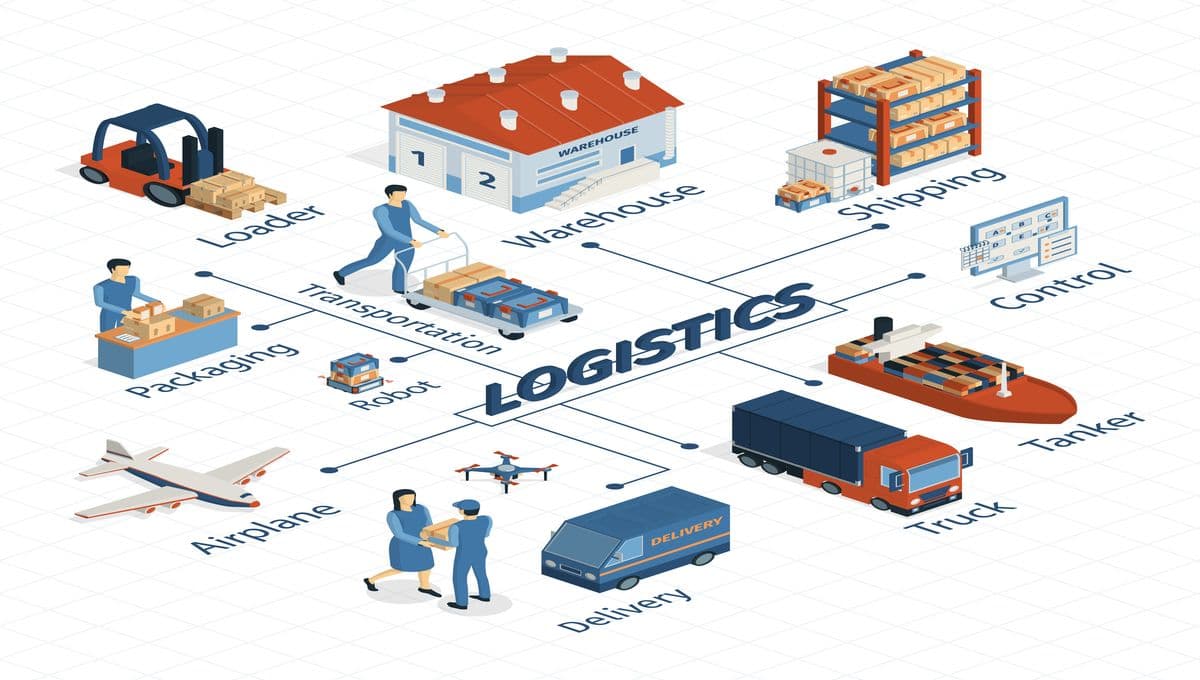

Economic stability is often discussed in terms of policies, markets, and financial systems. Yet, behind the scenes, another critical force plays an equally important role, which is supply chain management. Every industry depends on a well-organised system that ensures materials and finished goods move efficiently between businesses. From procurement to distribution, logistics supply chain management ensures, markets function reliably, and businesses can plan with confidence.
In India, where industries are growing rapidly and demand patterns are becoming increasingly dynamic, the push for innovation in the logistics and supply chain has become more important than ever before.
Traditional supply chains that were previously operating successfully are now transforming into more efficient, technology-driven networks that value efficiency, visibility, and reliability. Supply chain innovation has become an essential driver of economic stability, as organisations increasingly seek more efficient and resilient supply chain operations. This shift has encouraged the development of advanced logistics systems that support stable growth while reducing the impact of potential disruptions.
Why Supply Chains Matter for Economic Stability
At a fundamental level, supply chain management connects multiple business functions into one coordinated system. From procurement and production to distribution and inventory management, every stage relies on seamless coordination. When supply chains operate efficiently, businesses can meet demand without delays or shortages.
A well-managed supply chain contributes to economic stability in several meaningful ways. The following factors highlight why reliable logistics systems are essential for a stable business environment.
Ensuring Consistent Availability of Goods
Efficient logistics systems help businesses maintain regular supply levels and ensure products reach the right locations at the right time. This consistency prevents shortages that can disrupt industries and markets. When supply chains function reliably, businesses are better able to maintain steady production and meet customer demand.
Reducing Operational Uncertainty
Businesses benefit from predictable logistics processes that allow them to plan production schedules with greater confidence. When supply chain activities are coordinated properly, companies face fewer unexpected disruptions. This predictability allows organisations to allocate resources more efficiently and maintain smoother operations.
Supporting Continuous Industrial Activity
Reliable supply chains ensure that materials and finished goods move through the system without unnecessary interruptions. Industries depend on steady logistics flows to keep production lines operating consistently. When these processes remain well coordinated, businesses are able to maintain productivity and avoid costly operational slowdowns.
Improving Market Confidence
Strong supply chain systems create confidence among businesses, partners, and industry stakeholders. When goods move reliably through the logistics network, markets experience fewer sudden fluctuations. This level of consistency allows companies to operate with greater certainty and plan long-term business strategies more comfortably.
Strong logistics supply chain management creates a foundation for industries to operate smoothly. When companies can rely on predictable logistics systems, they are better equipped to maintain productivity and manage market fluctuations without significant disruptions.
The Role of Innovation in Modern Logistics
Innovation has become a defining feature of modern supply chains. As industries evolve and operational complexities increase, businesses must adopt smarter approaches to logistics planning and coordination. Innovation within logistics supply chain management helps organisations adapt to changing demands while maintaining efficiency. Many of these improvements focus on increasing visibility across supply chains and enabling faster decision-making. With better access to operational data and integrated management systems, companies can monitor supply patterns more accurately and respond to changes in real time.
At Varuna, we have seen how innovation can transform logistics operations for businesses across India. By integrating smarter monitoring tools and efficient planning systems, Varuna helps organisations maintain greater consistency in their supply chain processes.
These innovations do more than simply improve efficiency. They also strengthen resilience, enabling supply chains to remain stable even during periods of demand fluctuation or operational challenges.
Key Innovations Strengthening Supply Chains in India
Supply chain innovation in India is being driven by practical operational improvements as well as technology-enabled solutions. These developments are helping companies create supply chains that are more responsive, efficient, and adaptable.
Before exploring specific innovations, it is important to recognise that the goal of modern supply chain management is to move from reactive systems to proactive planning. Businesses today aim to anticipate demand patterns rather than simply responding to them.
Several innovations are helping strengthen supply chain operations across industries:
- Real-time Operational Visibility: Advanced monitoring tools allow businesses to track supply chain activities more closely, enabling quicker responses to operational changes.
- Data-Driven Demand Forecasting: Analytical tools help businesses anticipate demand patterns and plan inventory levels more accurately.
- Integrated Logistics Management Systems: Centralised platforms bring together different supply chain functions, improving coordination between suppliers, warehouses, and logistics teams.
- Smarter Inventory Planning: Improved inventory strategies help businesses balance availability with cost efficiency.
- Process Automation: Automation reduces manual errors and improves the speed of supply chain operations.
The Growing Importance of Third Party Logistics Providers
As supply chains expand in scale and complexity, many businesses are choosing to collaborate with specialised logistics partners. A professional third party logistics provider offers expertise and operational capabilities that help organisations manage supply chains more efficiently.
Outsourcing logistics functions allows businesses to focus on their primary operations while experienced logistics professionals manage coordination and execution. This approach often leads to improved efficiency and stronger operational performance.
Working with a reliable third party logistics provider provides several advantages:
- Specialised Operational Expertise: Logistics partners bring in-depth knowledge of logistics supply chain management, helping businesses streamline their operations.
- Greater Flexibility and Scalability: Businesses can adjust logistics capacity according to demand without making large infrastructure investments.
- Improved Supply Chain Visibility: Professional logistics providers use advanced monitoring systems that offer better transparency across supply chain activities.
- Operational Efficiency: Dedicated logistics teams optimise planning and coordination, reducing inefficiencies and delays.
At Varuna, we work closely with our partners to ensure that supply chain operations remain organised, efficient, and dependable. As a trusted third party logistics provider, Varuna focuses on creating logistics solutions that support both operational stability and long-term business growth.
Conclusion
Supply chains are not visible to the naked eye, yet their impact on economic stability is significant. The smooth functioning of supply chain management is a positive sign for various industries, as it keeps businesses running effectively.
Innovation in logistics and supply chain management is helping organisations build stronger and more resilient supply chains. With improved visibility tools and smarter systems, businesses are now better equipped to handle operational complexities and maintain smoother coordination across their supply networks.
At Varuna, we believe that reliable logistics partnerships are essential for building stable supply chains. By combining operational expertise with forward-thinking logistics strategies, Varuna continues to support businesses across India as a dependable third party logistics provider, helping create supply chain systems that contribute to long-term economic stability.
Frequently Asked Questions
Q1: How does supply chain efficiency prevent inflation?+
Efficiency reduces the total cost of bringing a product to market. When companies optimize logistics and inventory, they lower their operational overhead. If supply chains are stagnant or blocked, the scarcity of goods drives prices up, leading to "cost-push" inflation. By keeping goods flowing at a predictable cost, SCM helps maintain price stability.
Q2: What is the "Bullwhip Effect" and how does it hurt the economy? +
The Bullwhip Effect occurs when small fluctuations in consumer demand cause increasingly larger swings in inventory orders moving up the supply chain.
- The Result: Manufacturers overproduce, leading to wasted resources and layoffs, or underproduce, leading to shortages.
- Economic Impact: This instability creates "boom and bust" cycles within specific industries, destabilizing employment and market prices.
Q3: How does SCM impact a country’s Gross Domestic Product (GDP)?+
SCM is a massive contributor to GDP through logistics, warehousing, and transport sectors. Beyond its direct value, an advanced supply chain infrastructure attracts foreign investment. Countries with seamless "Trade Facilitation" (easy movement of goods) typically see higher economic growth because they can integrate more effectively into the global market.
Q4: Why is "Resilience" now more important than "Just-in-Time" delivery?+
For decades, the "Just-in-Time" (JIT) model focused on keeping zero waste. However, recent global shocks proved that JIT is fragile. Shifting toward "Just-in-Case" (building buffers and diversifying suppliers) protects the economy from sudden stops. While slightly more expensive, this resilience prevents the massive economic shutdowns seen during global port congestion or geopolitical conflicts.
Related Insights
WAREHOUSING
Role of Supply Chain Management in Economic Stability
31 Mar 2026, 8 MINUTE READ
SUPPLY CHAIN MANAGEMENT
Inventory Management Strategies for Online-Only Businesses
3 Apr 2026, 6 MINUTE READ

SUPPLY CHAIN MANAGEMENT
A Day in the Life of a Supply Chain Manager
15 Sep 2021, 3 MINUTE READ
WAREHOUSING
Multi-Client Warehousing: The Efficient Way To Scale Your Business
3 Feb 2026, 8 MINUTE READ

SUPPLY CHAIN MANAGEMENT
Top 5 Factors to Enhance Supply Chain Management
23 Feb 2024, 5 MINUTE READ
Popular Search
Supply Chain Management
Inventory Management
Logistics Supply Chain Management
Warehousing Management
3pl Third Party Logistics
Multi User Facilities
Logistics Companies In Chennai
Warehouse In Coimbatore
Logistics Services In Mumbai
Logistics Company In Delhi
Warehouses In Bangalore
Logistics Companies In Pune
Logistics Companies In Gurugram
Logistics Company In Indore
Logistics Company In Kolkata
Logistics Company In Coimbatore
Logistics Company in Hyderabad
Logistics Company in Kochi
Best Logistics Company In India
Logistics Services in Nagpur
Logistics Company in Ahmedabad
Warehousing in Delhi
Warehouse in Hyderabad
Cochin Logistics Companies
Logistics Companies In Mumbai
Warehousing In Kolkata
Warehousing In Chennai
Warehouse In Gurugram
Warehouses In Indore
Warehousing In Pune
Drive efficiencies throughout your supply chain with our technology-enabled services