
SUPPLY CHAIN MANAGEMENT
Reinventing the Tyre Supply Chain: Driving Efficiency with Smart Logistics
3 Feb 2026, 10 MINUTE READ
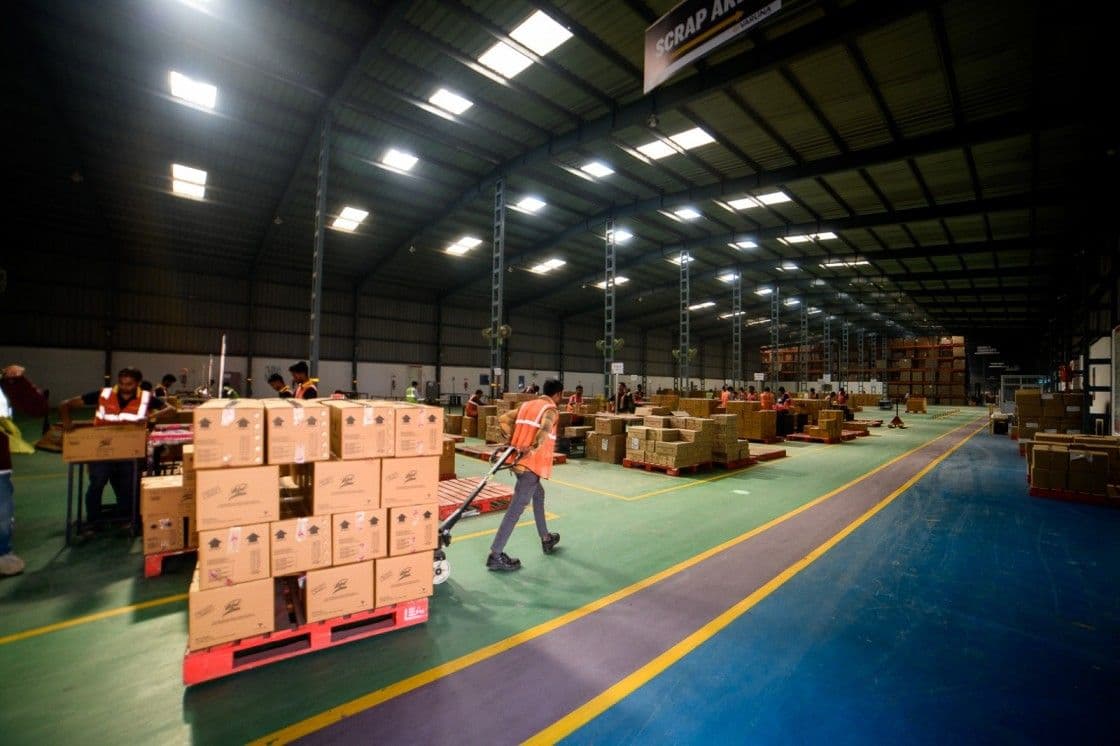

The tyre business is all about movement: regular, organised, and challenging, though usually unnoticed when all goes well. Day in and day out, tyres move from manufacturing facilities down to regional storage points and further on to distributors and dealers across India. These are routine moves, but they are never easy. Tyres are heavy, bulky, and sensitive to how they are stacked, stored, and handled. A small lapse at any point in the chain quietly disrupts availability, inflates costs, and places pressure on teams across the organisation.
Over the last decade, tyre companies have begun to reassess the design of their operations. Where once the emphasis might have fallen squarely on reacting quickly to a shortage or delay, today the focus lies on strengthening supply chain management as a core business function. Rather than short-term fixes, tyre makers and distributors are investing in structured planning, disciplined execution, and smarter logistics practices. The objective is not speed alone, but predictability, control, and consistency across the whole network.
The Unique Nature of the Tyre Supply Chain
The tyre supply chain is very different from many industrial segments. Tyres take up considerable space, cannot be compressed, and require careful handling to avoid deformation or surface damage. The demand pattern also ranges widely across regions, depending upon the vehicle density, usage of roadways, and replacement cycles.
Among the defining characteristics of the tire supply chain are:
- High-volume movement and limited storage flexibility
- Regional demand fluctuations that vary with time
- Sensitivity to stacking, loading, and unloading practices
- The requirement for a steady replenishment rather than irregular bulk movement
For these reasons, tyre logistics cannot rely on improvisation. Even small planning mistakes lead to over-inventory in one location and shortages at another. Strong logistics supply chain management brings balance to this complexity by aligning planning to the ground realities.
Where Inefficiencies Commonly Begin
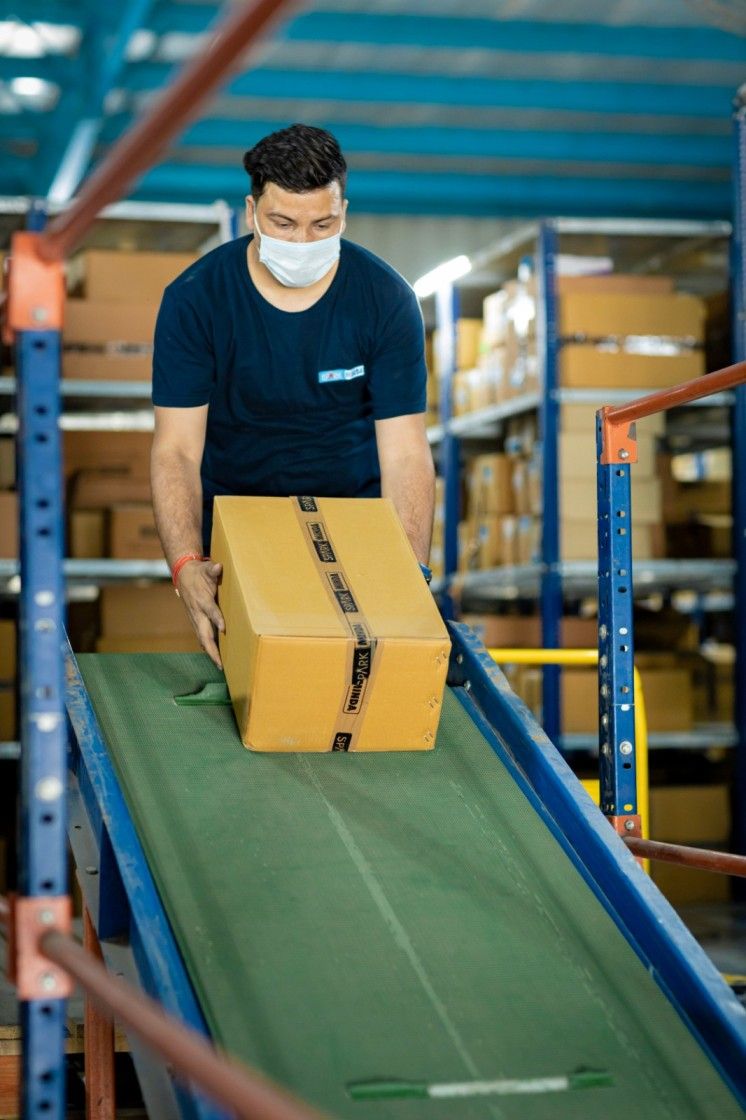
Inefficiencies in tyre logistics rarely surface suddenly. They usually build up gradually through overlooked gaps in storage design, handling practices, planning, and execution, eventually creating operational strain across the network.
In practice, these inefficiencies often originate at warehouses and transit points where tyres are not stored or handled with adequate technical discipline. Common causes include:
- Inadequate racking and stacking practices, such as incorrect vertical or horizontal storage, leading to tyre deformation over time.
- Insufficient floor load capacity or inflexible warehouse layouts, restricting safe stacking heights and efficient movement.
- Exposure to heat, direct sunlight, moisture, or ozone, accelerating ageing, cracking, and loss of tyre integrity
- Lack of clear SOPs for rotation, stacking intervals, and movement, resulting in flat-spotting or bead damage.
- Poor planning of dispatches, forcing last-minute movements and vehicles running below optimal capacity.
- Repeated handling of tyres due to unplanned relocations, increasing the risk of surface and structural damage.
- Inventory imbalances, where certain regions carry excess stock while others face shortages, despite overall availability.
Individually, these issues may appear manageable. However, when combined, they inflate logistics costs, reduce service reliability, and weaken confidence across distributors and dealers. Addressing them requires an end-to-end supply chain view, one that integrates forecasting, storage design, handling discipline, and execution consistency, rather than treating logistics as a series of isolated activities.
Planning As The Foundation of Control
Planning is the stage at which tyre supply chains either gain stability or lose it. In the absence of structured planning, the operations become reactive, wherein teams have little control over daily movement.
Planning effectively involves:
- Demand planning based on historical sales and regional trends
- Allocate stock to locations by correctly applying realistic consumption patterns
- Establishing regular dispatch cycles to minimise uncertainty.
- Establishing standard operating procedures for handling and documentation.
Planning should not be treated as a one-off exercise. It works when regularly reviewed and refined. This allows the teams to adjust to the changes in demand while maintaining overall stability.
Turning Plans into Consistent Execution
Where planning defines intent, execution determines whether those plans translate into reliable outcomes. In tyre logistics, effective execution is driven less by speed and more by discipline, network strength, and geographical reach.
Operational consistency improves when the logistics network itself is designed to support execution on the ground. This includes:
- Warehouses strategically located near key dealer clusters and OEM manufacturing plants, reducing transit time and handling frequency.
- A multi-location distribution presence, enabling region-wise stock positioning and faster response to local demand fluctuations.
- Strong first-mile connectivity from manufacturing plants and reliable last-mile reach to urban and semi-urban dealer networks.
- Route planning that accounts for road conditions, load safety, and tyre dimensions, rather than distance alone.
- Vehicle capacity matched accurately to tyre size and load configuration, preventing underutilisation and in-transit damage.
- Delivery schedules aligned with receiving teams, ensuring smooth unloading and reduced dwell time.
- Clear communication between planners, transport teams, and warehouses, minimising deviations from plan.
When execution is supported by a well-connected logistics network and consistent operational practices, uncertainty is reduced across the supply chain. Over time, this reliability strengthens trust with dealers and distributors who depend on predictable replenishment to maintain their own service levels.
Managing Inventory with Balance and Discipline
Inventory imbalance is a persistent challenge in the tyre industry. Excess stock increases storage costs and locks up working capital, while shortages directly impact product availability and sales.
Better inventory control is achieved not only through demand alignment but also through disciplined, compliant storage practices. This includes:
- Periodic regional demand and replacement cycle analysis, to prevent overstocking in low-movement locations.
- Planned stock movements, reducing reliance on emergency transfers that disrupt warehouse safety norms.
- Clear visibility into inventory levels across all warehouses and depots, enabling controlled allocation decisions.
- Coordination between sales forecasts and logistics planning, ensuring stock is positioned where it is genuinely required.
- Strict adherence to fire safety and statutory compliance requirements, including aisle spacing, stacking height limits, fire exits, and access for emergency response.
- Regular safety audits and documentation, ensuring warehouses handling large tyre volumes meet regulatory standards and reduce operational risk.
When inventory planning is aligned with both demand realities and safety compliance, tyre companies can minimise avoidable movement, safeguard assets, and improve working capital efficiency without compromising operational reliability.
The Expanding Role of Third-Party Logistics
With increased size and complexity in the tyre network, it is hard to manage logistics completely in-house; there is greater reliance nowadays on third-party logistics partners.
A capable logistics partner offers:
- Experience in handling heavy, high-volume products
- Established road networks linking plants, depots, and dealers
- Trained teams with knowledge of tyre handling requirements
- Accountability systems that support tracking and reporting
In fact, just the right partnership often enhances, rather than diminishes, control. Tyre companies can still maintain oversight with clear expectations, defined performance measures, and regular reviews while benefiting from the specialised expertise.
Technology as a Practical Enabler
Technology is increasingly an important support tool in tyre logistics, but the value is in simplicity, not in complexity: to enable better decisions, rather than bury teams under a sea of data.
Useful technology applications include:
- Real-time visibility of vehicle movement
- Alerts regarding delays or deviations from the planned route
- Reports highlighting the bottlenecks that recur
- Data analyses to enhance forecasting accuracy
When applied to daily operations, technology empowers supply chain management and helps teams act early rather than react when problems get out of hand.
Reducing Damage Through Handling Discipline
Damage in transit is a recurring concern in tyre logistics. Even relatively minor lapses in how tyres are stacked or unloaded can lead to lost product and strained dealer relationships.
Damage reduction improves through:
- Standardised loading and stacking guidelines
- Training programs for drivers and handling personnel
- Periodic audits of movement practices
- Clear accountability for deviations from standards
Long-term, appropriate handling practices minimise losses and instill a disciplined culture throughout the network.
Improving Co-ordination Across Functions
A supply chain of tyres works most efficiently when departments work in tandem. Gaps between the sales, planning, and logistics teams commonly lead to conflicting priorities and last-minute changes.
Stronger coordination includes:
- Sales forecasts should be transparently shared.
- Joint reviews of the planning assumptions
- Operational feedback is used to refine plans
- Performance measurement along the whole supply chain
This collaboration removes friction and builds mutual ownership of outcomes.
Preparing the Supply Chain for Expansion
Growth brings different challenges: as tyre companies are expanding capacity or entering new regions, logistics systems have to scale without losing control.
Preparation includes:
- Enhancing planning and forecasting frameworks.
- Partner with logistics providers who can support growth.
- Investing in training and process standardisation.
- Regularly reviewing systems to address developing gaps.
A scalable supply chain will facilitate expansion without compromising reliability and consistency.
Building Resilience into Daily Operations
Preparation, not reaction, gives resilience in the tyre supply chain. When disruptions occur, systems built on strong planning and execution recover faster.
Resilient practices include:
- Buffer stock is maintained at key locations.
- Having alternative routes planned out in advance.
- Ensuring clear escalation processes.
- Review of disruptions to prevent recurrence.
These measures help the tyre companies maintain their service levels even during periods of uncertainty.
Strengthening the Tyre Supply Chain for Long-Term Success
Reinventing the tyre supply chain is not about a sudden transformation. It is all about building systems that can deliver predictable outcomes day in and day out. Indian manufacturers and distributors of tyres, who focus on structured logistics, are beginning to see tangible benefits in cost control, service reliability, and operational confidence. Experienced partners continue to play a steady, supportive role in this evolution.
We at Varuna Group bring a disciplined, process-driven approach to road-based logistics that helps the tyre businesses strengthen planning, execution, and consistency. With appropriate systems and partnerships in place, smart logistics becomes a quiet yet dependable foundation that keeps the tyre supply chain running smoothly, even while volumes keep on growing and market demands change.
Related Insights
WAREHOUSING
Role of Supply Chain Management in Economic Stability
31 Mar 2026, 8 MINUTE READ
SUPPLY CHAIN MANAGEMENT
Inventory Management Strategies for Online-Only Businesses
3 Apr 2026, 6 MINUTE READ

SUPPLY CHAIN MANAGEMENT
A Day in the Life of a Supply Chain Manager
15 Sep 2021, 3 MINUTE READ
WAREHOUSING
Multi-Client Warehousing: The Efficient Way To Scale Your Business
3 Feb 2026, 8 MINUTE READ

SUPPLY CHAIN MANAGEMENT
Top 5 Factors to Enhance Supply Chain Management
23 Feb 2024, 5 MINUTE READ
Popular Search
Supply Chain Management
Inventory Management
Logistics Supply Chain Management
Warehousing Management
3pl Third Party Logistics
Multi User Facilities
Logistics Companies In Chennai
Warehouse In Coimbatore
Logistics Services In Mumbai
Logistics Company In Delhi
Warehouses In Bangalore
Logistics Companies In Pune
Logistics Companies In Gurugram
Logistics Company In Indore
Logistics Company In Kolkata
Logistics Company In Coimbatore
Logistics Company in Hyderabad
Logistics Company in Kochi
Best Logistics Company In India
Logistics Services in Nagpur
Logistics Company in Ahmedabad
Warehousing in Delhi
Warehouse in Hyderabad
Cochin Logistics Companies
Logistics Companies In Mumbai
Warehousing In Kolkata
Warehousing In Chennai
Warehouse In Gurugram
Warehouses In Indore
Warehousing In Pune
Drive efficiencies throughout your supply chain with our technology-enabled services
View Services