
LOGISTICS
How Centralised Control Models Improve Multi-Location Logistics Efficiency
18 Feb 2026, 6 MINUTE READ
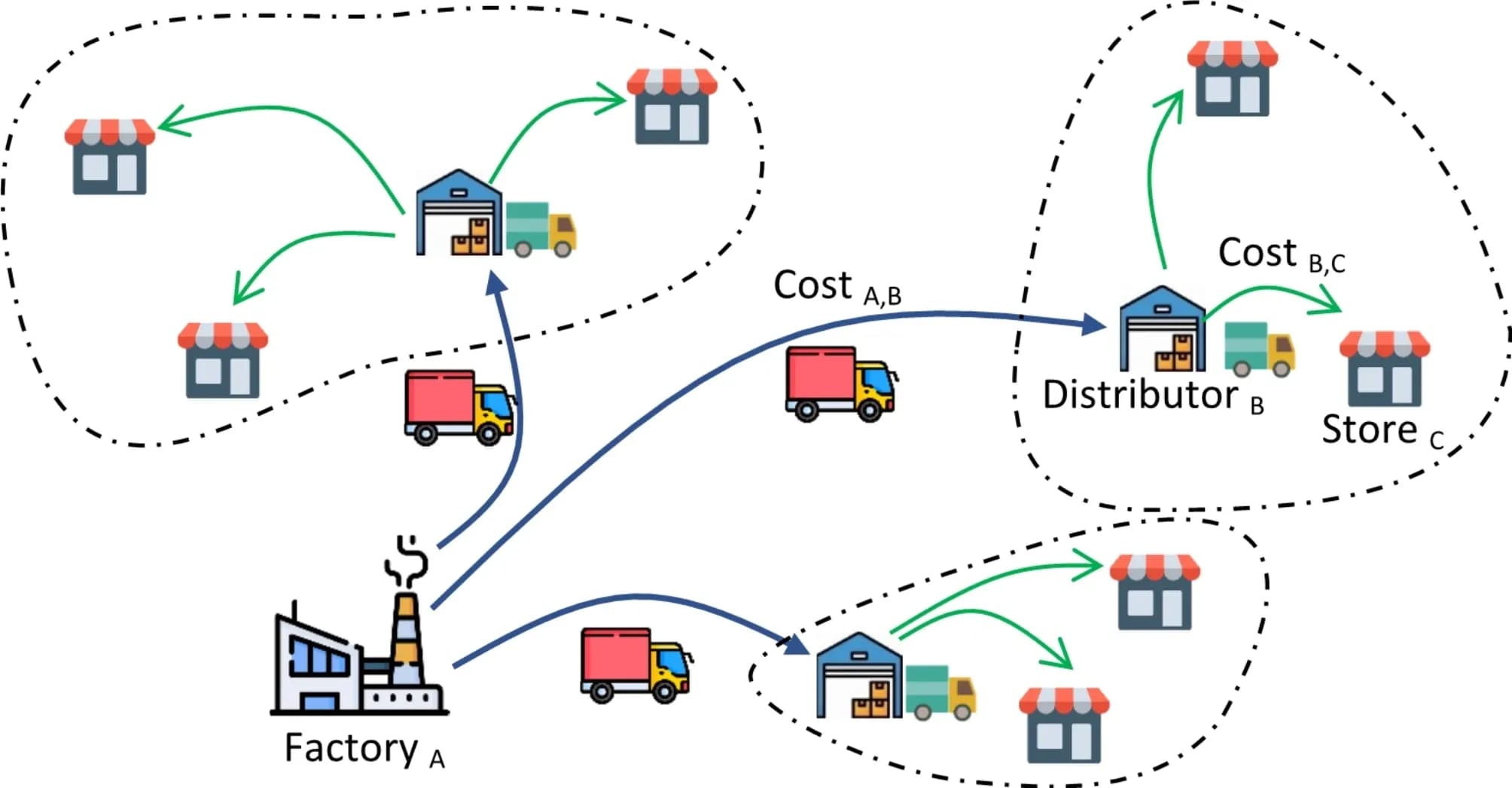

Managing logistics across multiple locations has never been simple. As operations expand, so do the layers of decision-making, reporting, and coordination. What once worked for a single facility often starts to break down when replicated across regions. Delays in information, inconsistent processes, and uneven performance become harder to track and even harder to fix. This is where centralised control models are proving their value. By bringing visibility and decision-making into a unified framework, organisations are finding more effective ways to improve logistics management across dispersed operations in India.
Rather than removing local expertise, centralised models aim to connect it. They create a shared structure where insights, controls, and standards flow consistently, while execution remains close to the ground. The result is a logistics system that is more responsive, predictable, and efficient.
Understanding Centralised Control In Logistics Operations
Centralised control in logistics does not mean micromanagement from a single office. It refers to a structured approach where planning, monitoring, and performance oversight are aligned through a common system or control layer.
In logistics supply chain management, this model allows organisations to view operations as a connected whole rather than a collection of independent sites. Data from different locations is consolidated, analysed, and used to guide decisions that affect the wider network.
At its core, a centralised control model is built around a few key principles:
- Unified visibility across all operational locations
- Standardised processes and performance metrics
- Central oversight with local execution authority
- Faster and more consistent decision-making
These principles help create stability as logistics operations scale.
Improving Visibility Across Multiple Locations
One of the biggest challenges in multi-location logistics is fragmented visibility. When each location operates with its own reporting structure, it becomes difficult to form an accurate picture of overall performance.
Centralised control models address this by consolidating operational data into a single view. Instead of relying on delayed or inconsistent reports, decision-makers gain access to real-time insights across the network.
This improved visibility leads to practical operational benefits, including:
- Clear comparison of performance across locations
- Early identification of underperforming areas
- Faster recognition of emerging issues
- More reliable data for planning and forecasting
For logistics management teams, this shared view reduces uncertainty and improves confidence in daily decisions.
Standardising Processes Without Losing Flexibility
As logistics networks grow, process variation often increases. While some flexibility is necessary, excessive variation can lead to inefficiencies and inconsistent service quality.
Centralised control models help strike aa balance by defining standard processes while still allowing room for local adaptation. Core workflows, performance benchmarks, and reporting formats are aligned centrally, creating consistency across the network.
This approach supports operational stability in several ways, such as:
- Reduced errors caused by process inconsistency
- Easier training and onboarding across locations
- Clear expectations for performance and compliance
- Faster replication of best practices
Within logistics supply chain management, this balance between structure and flexibility is essential for sustained efficiency.
Strengthening Decision-Making And Accountability
In decentralised systems, decision-making authority is often unclear. This can result in delays, duplicated effort, or conflicting actions across locations.
Centralised control models bring clarity by defining who decides what and at which level. Strategic and network-wide decisions are handled centrally, while day-to-day execution remains with local teams.
This clarity improves accountability by enabling:
- Faster escalation and resolution of operational issues
- Clear ownership of outcomes and decisions
- Consistent application of policies across locations
- Better alignment between strategy and execution
For logistics management, this structure reduces friction and improves overall responsiveness.
Enhancing Coordination With Logistics Services Providers
Many organisations rely on external Logistics Services partners to support different parts of their operations. Coordinating across multiple partners and locations can quickly become complex.
A centralised control model provides a single point of coordination. Instead of managing relationships in silos, organisations can align expectations, performance standards, and communication centrally.
This coordinated approach delivers benefits such as:
- Consistent service expectations across locations
- Simplified performance monitoring of partners
- Faster issue resolution through clear escalation paths
- Stronger collaboration built on shared data
When working with Logistics Services providers, central oversight helps ensure alignment without adding unnecessary complexity.
Better Resource Allocation Across The Network
Resource planning becomes increasingly difficult as the number of operational locations grows. Without a central view, some sites may face shortages while others remain underutilised.
Centralised control models enable organisations to allocate resources based on network-wide needs rather than isolated requests. Decisions are informed by comparative data and broader operational priorities.
This leads to more effective utilisation through outcomes such as:
- Reduced idle capacity across locations
- Improved workload balancing
- More informed planning decisions
- Better support during demand fluctuations
For logistics supply chain management, this approach supports both efficiency and resilience.
Supporting Risk Management And Compliance
Risk exposure often increases with scale. Multiple locations mean more variables, more processes, and greater chances of deviation.
Centralised control strengthens risk management by applying consistent monitoring and compliance standards across all sites. Instead of relying on periodic reviews, risks are identified and addressed as they emerge.
This model supports stronger risk oversight by enabling:
- Early detection of operational deviations.
- Uniform compliance checks across locations.
- Faster corrective actions.
- Better documentation and traceability.
Over time, this reduces operational uncertainty and builds more reliable logistics systems.
Enabling Continuous Improvement At Scale
Continuous improvement becomes harder when insights remain confined to individual locations. Lessons learned in one site are often not shared across the network.
Centralised control models make improvement scalable by capturing performance insights centrally and distributing learnings across locations. This ensures improvements are not isolated but replicated where relevant.
This structured improvement approach supports progress in areas such as:
- Faster identification of efficiency gaps
- Shared learning across locations
- Consistent performance improvement initiatives
- Stronger alignment between goals and outcomes
This ongoing improvement cycle strengthens logistics management across the entire network.
The Role Of Centralised Control In India’s Logistics Landscape
As logistics operations in India continue to expand across regions, managing complexity will remain a defining challenge. Centralised control models offer a practical way to maintain consistency, visibility, and efficiency while still allowing teams at individual locations to operate with autonomy. When implemented thoughtfully, these models help organisations scale without losing operational discipline or service quality.
Logistics leaders who balance central governance with robust on-ground execution build systems that are inherently more resilient. At Varuna Group, we recognise that well-defined control models, backed by strong operational insight, bring consistency and clarity to complex, multi-location logistics networks. By integrating decision-making, performance monitoring, and execution within a unified framework, organisations can ensure that centralised oversight translates into reliable efficiency across the logistics supply chain management ecosystem.
Related Insights

LOGISTICS
5 Trends that are Reshaping the Supply Chain Industry
5 Nov 2024, 5 MINUTE READ

LOGISTICS
Indian Logistics During Covid-19 Pandemic - The Journey from Resilience to Rebound
19 Sep 2020, 6 MINUTE READ

LOGISTICS
Impact of Fuel Prices in India on Logistics and Supply Chain Efficiency
5 Sep 2024, 5 MINUTE READ
LOGISTICS
Inbound vs Outbound Logistics: Key Differences & Benefits in 2026
22 Apr 2026, 6 MINUTE READ

LOGISTICS
How AI Is Changing Logistics and Supply Chain Operations
26 May 2026, 5 MINUTE READ
Popular Search
Supply Chain Management
Inventory Management
Logistics Supply Chain Management
Warehousing Management
3pl Third Party Logistics
Multi User Facilities
Logistics Companies In Chennai
Warehouse In Coimbatore
Logistics Services In Mumbai
Logistics Company In Delhi
Warehouses In Bangalore
Logistics Companies In Pune
Logistics Companies In Gurugram
Logistics Company In Indore
Logistics Company In Kolkata
Logistics Company In Coimbatore
Logistics Company in Hyderabad
Logistics Company in Kochi
Best Logistics Company In India
Logistics Services in Nagpur
Logistics Company in Ahmedabad
Warehousing in Delhi
Warehouse in Hyderabad
Cochin Logistics Companies
Logistics Companies In Mumbai
Warehousing In Kolkata
Warehousing In Chennai
Warehouse In Gurugram
Warehouses In Indore
Warehousing In Pune
Drive efficiencies throughout your supply chain with our technology-enabled services