
LOGISTICS
How Can Generative AI Drive Logistics Transformation
18 Feb 2026, 6 MINUTE READ
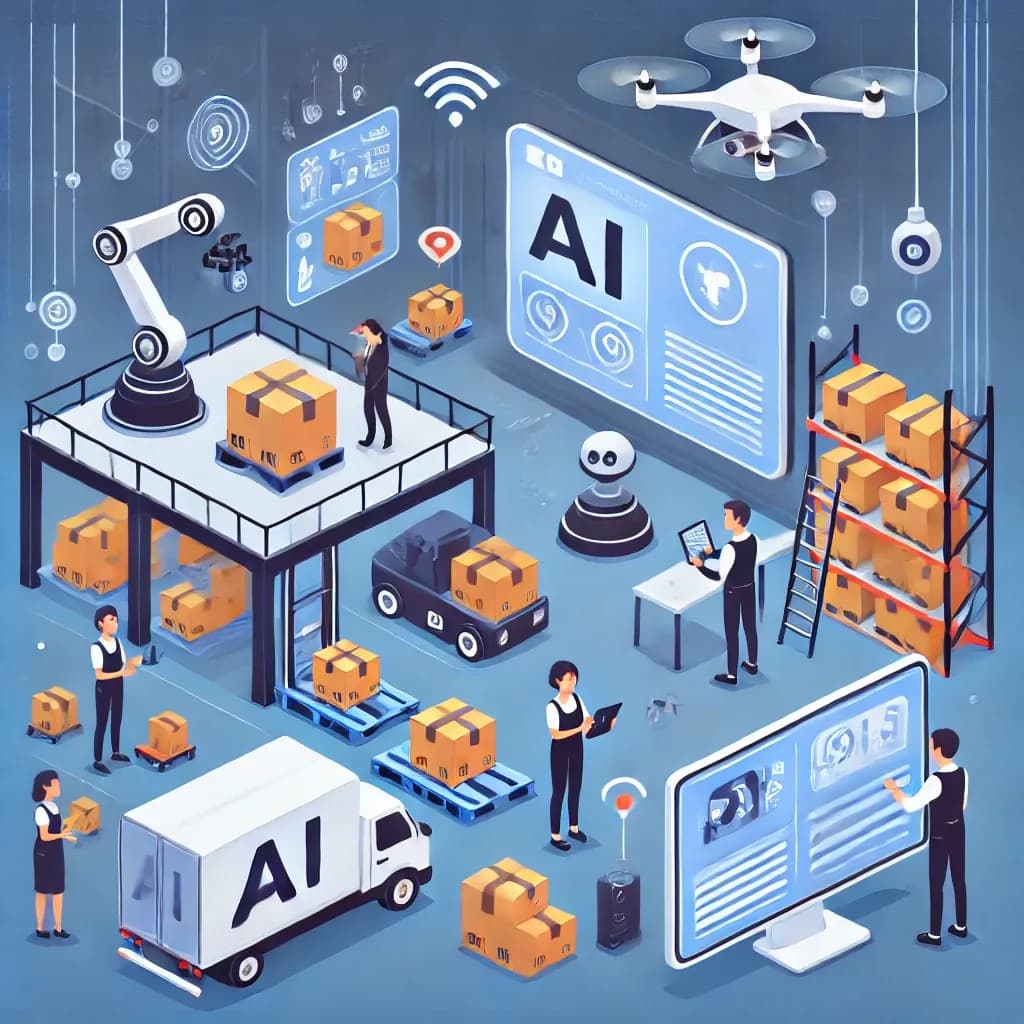

Logistics has always depended on how well people plan and how calmly they respond when plans fall apart. For a long time, decisions were shaped by experience and reports that explained what went wrong after it had already happened. Generative AI is quietly changing this pattern. Instead of waiting for outcomes, logistics teams can now study patterns as they form, test different possibilities, and act with greater confidence. This change is not loud or dramatic, but its influence on logistics management in India is becoming harder to ignore.
In organisations like Varuna Group, where logistics operations span multiple regions, customers, and service models, this shift is particularly relevant. Decision-making has traditionally been driven by on-ground experience and operational discipline. Generative AI enhances this foundation by adding foresight, helping teams anticipate issues rather than only responding to them.
Rather than replacing people or existing processes, generative AI works alongside them. It sharpens judgement, improves visibility, and helps organisations function with greater clarity across complex logistics supply chain management networks.
Understanding Generative AI In A Logistics Context
To see how transformation begins, it is important to understand what generative AI brings into logistics environments. Unlike traditional systems that follow fixed instructions, generative AI learns continuously from data generated during everyday operations.
Within a warehousing-led logistics environment like Varuna Group’s, generative AI can learn from diverse operational inputs like warehouse throughput, seasonal demand shifts, customer-specific service requirements, and regional operating conditions. This enables recommendations that are contextual, practical, and aligned with real operating constraints.
In logistics supply chain management, this means the system can analyse historical performance, observe current conditions, and generate new recommendations based on emerging patterns. Over time, this learning ability allows AI to support decision-making in a more practical and informed manner.
Some of the defining characteristics that make generative AI suitable for logistics include:
- The ability to work with structured and unstructured operational data
- Continuous learning from outcomes and performance trends.
- Scenario creation rather than single-point predictions.
- Support for human decision-making instead of rigid automation.
These qualities form the foundation for how generative AI reshapes logistics management at multiple levels.
Smarter Demand Forecasting And Planning
Planning has always been one of the most demanding areas in logistics. Shifting demand, regional variations, and unexpected disruptions often make conventional forecasting methods less reliable. Generative AI introduces a more flexible and responsive approach to planning.
Instead of producing a single static forecast, AI systems generate multiple demand scenarios. This allows planners to prepare for different possibilities rather than relying on one assumption.
For a multi-location logistics provider like Varuna Group, this scenario-based planning is especially valuable. It allows capacity planning to account for customer mix, regional demand patterns, and infrastructure limitations, reducing stress on operations during peak periods.
This improved planning approach influences operational readiness in several important ways, including:
- More accurate alignment between demand expectations and available capacity
- Reduced instances of over-planning or under-utilisation
- Faster adjustments when patterns begin to shift
- Improved confidence in planning decisions backed by data
- Better planning across distributed warehousing networks
For logistics management teams, this leads to smoother operations and fewer last-minute corrections.
Operational Visibility And Exception Handling
As operations scale across multiple warehouses and customer accounts, maintaining consistent visibility becomes challenging. Generative AI supports Varuna Group’s operational teams by highlighting deviations early, before they affect service levels or customer confidence.
Logistics operations generate large volumes of data every day, but data alone does not improve performance. The real challenge lies in identifying what needs attention before it becomes a serious disruption.
Generative AI strengthens operational visibility by continuously monitoring activity and identifying patterns that signal potential issues. Instead of responding after delays or deviations occur, teams receive insights early.
This proactive monitoring helps operations move from reaction to prevention through outcomes such as:
- Early identification of bottlenecks and delays.
- A clearer understanding of process-level root causes, not just delays
- Action-oriented insights instead of generic alerts.
- Faster response times across operational teams.
Within logistics supply chain management, this level of visibility helps maintain consistency even as operations grow more complex.
Enhancing Workforce Productivity And Decision Support
At Varuna Group, operational excellence has always been people-led. Generative AI reinforces this approach by reducing manual effort and information overload, allowing teams to focus on supervision, coordination, and continuous improvement.
People remain central to logistics operations. From planning to execution, human judgement plays a critical role. Generative AI strengthens this role by supporting decision-making rather than replacing it.
By analysing performance data and operational trends, AI tools provide insights that would otherwise require significant manual effort. This support helps teams stay focused and reduces decision fatigue.
As a result, daily work becomes more efficient in areas such as:
- Automated summaries of operational performance
- Decision suggestions based on historical outcomes
- Scenario comparisons for planning and allocation
- Reduced dependence on manual reporting
This allows logistics management professionals to spend more time on supervision, coordination, and improvement.
Improving Collaboration Across Third Party Logistics Networks
Collaboration becomes more challenging when multiple stakeholders are involved. Many organisations depend on Third Party Logistics partners, making coordination and information flow especially important
For Varuna Group, which works closely with customers, vendors, and transport partners, generative AI strengthens coordination by ensuring all stakeholders operate from a shared and updated view of performance.
Generative AI helps bring consistency to how operational data is interpreted and shared. Instead of relying on static reports, stakeholders can work with insights that update as conditions change.
This improved collaboration supports better coordination by enabling:
- A shared understanding of performance metrics
- Early identification of issues across the network
- More structured and data-backed communication
- Greater transparency and accountability
- Improved coordination between warehousing, transport, and customer teams
For Third Party Logistics relationships, this leads to stronger alignment and long-term operational trust.
Risk Management And Compliance Support
Risk is an unavoidable part of logistics operations. Whether it involves process deviations or operational delays, unmanaged risk often results in avoidable losses.
In established logistics organisations like Varuna Group, compliance and risk management are foundational. Generative AI adds an additional layer of assurance by continuously monitoring patterns that may indicate emerging risks.
Generative AI strengthens risk management by learning from past incidents and monitoring current behaviour. It does not simply highlight risks but also explains patterns that may lead to future issues.
This intelligence-driven approach supports logistics management teams through:
- Early detection of operational deviations
- Ongoing compliance monitoring without manual audits
- Insights based on historical risk scenarios
- Faster corrective actions before issues escalate
Over time, this builds more resilient logistics supply chain management systems.
Data-Driven Continuous Improvement
Continuous improvement is a long-term goal for most logistics organisations, but it is often limited by periodic reviews and incomplete data. Generative AI enables a more consistent improvement cycle.
By analysing performance trends on an ongoing basis, AI systems provide regular feedback that supports small but meaningful refinements. This ensures improvement becomes part of daily operations rather than an occasional exercise.
This approach aligns closely with Varuna Group’s philosophy of steady improvement. Rather than large, disruptive changes, generative AI enables incremental refinements that accumulate into meaningful growth.
This ongoing, data-led approach means improvements are not occasional or reactive. Instead, insights feed directly into everyday operations, enabling teams to make consistent, informed refinements across multiple areas, such as:
- Faster identification of inefficiencies
- Better measurement of improvement initiatives
- Stronger learning loops across teams
- Closer alignment between strategy and execution
This steady improvement model supports sustainable growth across logistics management functions.
The Road Ahead For Logistics In India
Generative AI is steadily reshaping logistics in India. The transformation is not about sudden disruption, but about better decisions, stronger visibility, and improved coordination.
Organisations that integrate generative AI thoughtfully into existing processes are better equipped to manage complexity and scale. When combined with operational discipline and domain expertise, AI becomes a practical enabler rather than a theoretical concept.
In this evolving environment, we at Varuna Group illustrate how experience and innovation can work together. By aligning generative AI with deep operational understanding, logistics organisations can build systems that perform reliably today while remaining adaptable for the future.
Related Insights

LOGISTICS
5 Trends that are Reshaping the Supply Chain Industry
5 Nov 2024, 5 MINUTE READ

LOGISTICS
Indian Logistics During Covid-19 Pandemic - The Journey from Resilience to Rebound
19 Sep 2020, 6 MINUTE READ

LOGISTICS
Impact of Fuel Prices in India on Logistics and Supply Chain Efficiency
5 Sep 2024, 5 MINUTE READ
LOGISTICS
Inbound vs Outbound Logistics: Key Differences & Benefits in 2026
22 Apr 2026, 6 MINUTE READ
LOGISTICS
How AI Is Changing Logistics and Supply Chain Operations
26 May 2026, 5 MINUTE READ
Popular Search
Supply Chain Management
Inventory Management
Logistics Supply Chain Management
Warehousing Management
3pl Third Party Logistics
Multi User Facilities
Logistics Companies In Chennai
Warehouse In Coimbatore
Logistics Services In Mumbai
Logistics Company In Delhi
Warehouses In Bangalore
Logistics Companies In Pune
Logistics Companies In Gurugram
Logistics Company In Indore
Logistics Company In Kolkata
Logistics Company In Coimbatore
Logistics Company in Hyderabad
Logistics Company in Kochi
Best Logistics Company In India
Logistics Services in Nagpur
Logistics Company in Ahmedabad
Warehousing in Delhi
Warehouse in Hyderabad
Cochin Logistics Companies
Logistics Companies In Mumbai
Warehousing In Kolkata
Warehousing In Chennai
Warehouse In Gurugram
Warehouses In Indore
Warehousing In Pune
Drive efficiencies throughout your supply chain with our technology-enabled services